
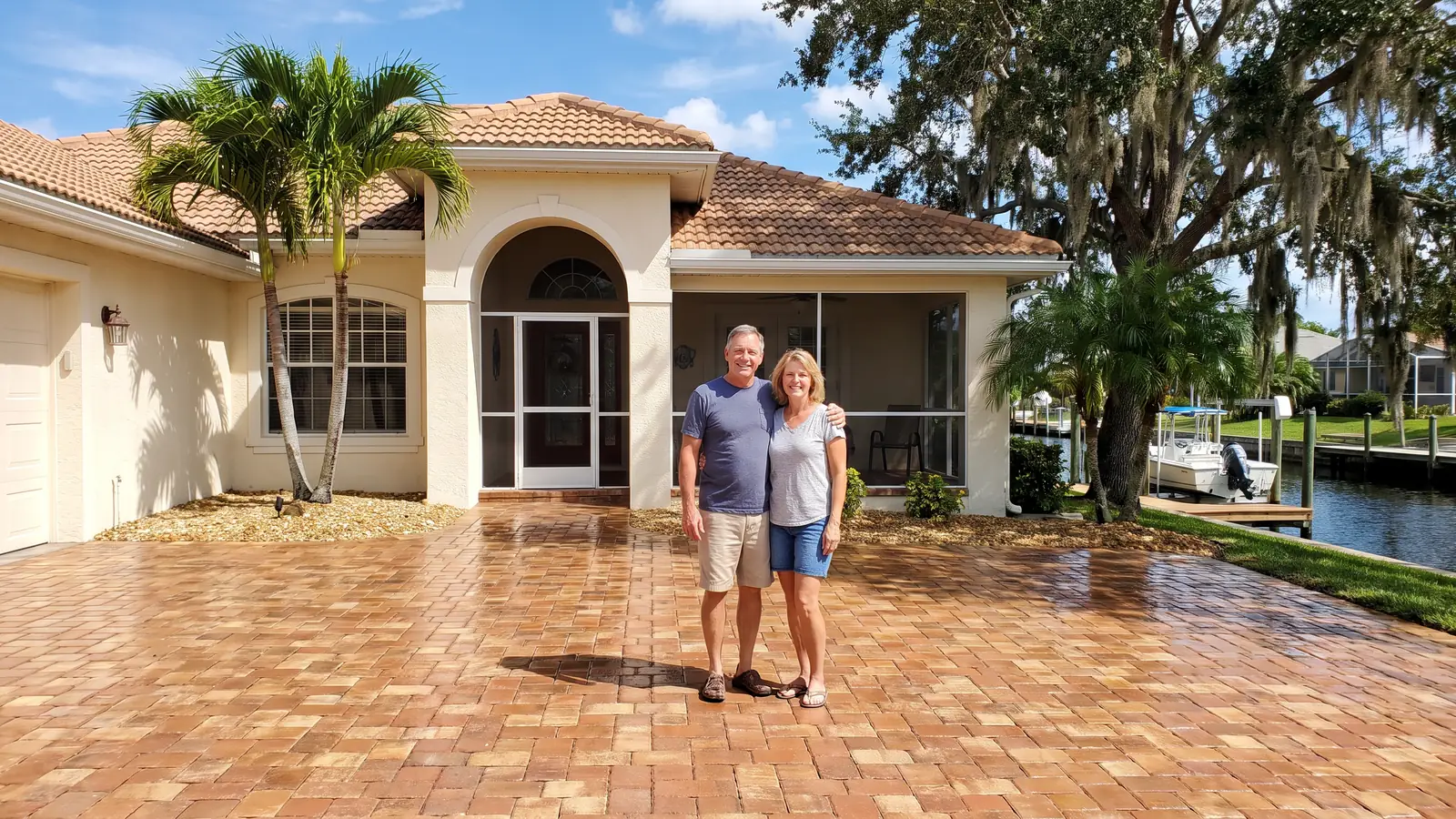
Paver sealing for Cocoa homes
Paver Sealing in Cocoa, FL
Pavers at Cocoa's mid-century homes get a free sealing estimate when you call (321) 329-1122.
- Brings out deeper paver color
- Fresh joint sand helps lock pavers in place
- Gives weeds less room to grow
- Makes the surface easier to keep clean
- Free estimate, no obligation
Request a Free Estimate
Free, no obligation.
Fast, careful paver sealing in Cocoa
Paver sealing is available across Cocoa, from the Village streets near the Indian River to the neighborhoods along Clearlake Road. The job covers a wash, new joint sand and sealer on driveways, walkways and patios, and the estimate is free. Call (321) 329-1122, and an answer should reach you inside 1 business day, usually much sooner.
Picture a driveway that has gone dull and gray, with weeds standing in the joints and a stain by the garage. Washed, re-sanded and sealed, that same driveway looks like one surface instead of a patchwork. To start, request a free estimate and describe what you see.
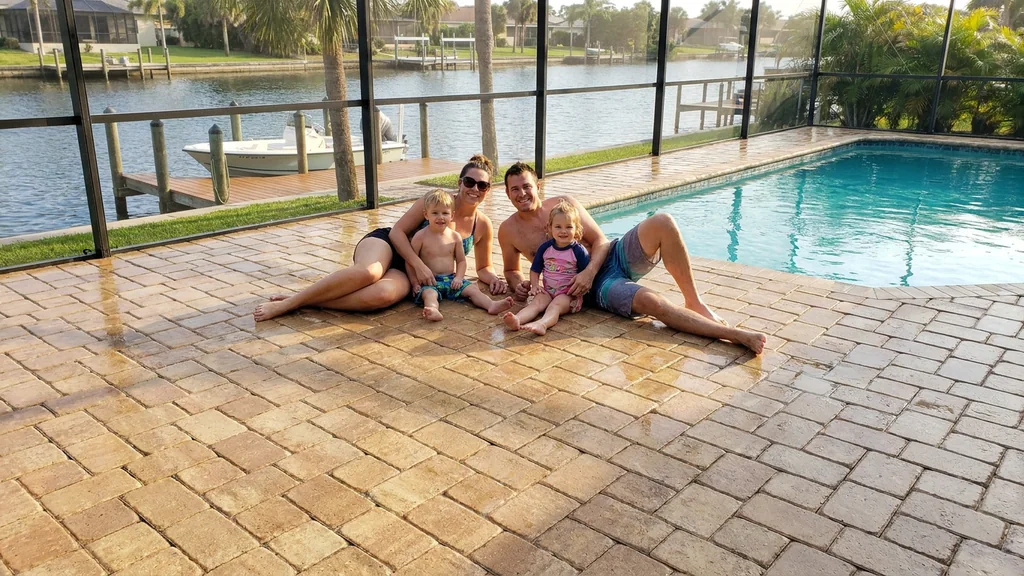
Why hire a local paver sealing contractor in Cocoa?
Cocoa homeowners hire a local paver contractor because the housing here runs from 1950s blocks to new builds, and each age needs a different plan. You can request a free estimate to see which of those matches your house.
Free inspection
A contractor inspects your Cocoa pavers at no charge and hands you a written price. You agree to nothing until you have read it.
A range to measure by
Two Brevard companies publish the same $1.85 to $4.00 per square foot to clean, sand and seal. Use it to judge any Cocoa quote.
Older pavers can qualify
Sound pavers on a 1960s home can often be sealed. Base and joints get checked before any sealer opens, and you hear the result in plain words.
Owners and landlords welcome
Live in the home or rent it out, and either way you decide the date and finish. There is no obligation to hire after the estimate.
Get Your Free Estimate in Cocoa
Tell us about your pavers in Cocoa.
Free, no obligation
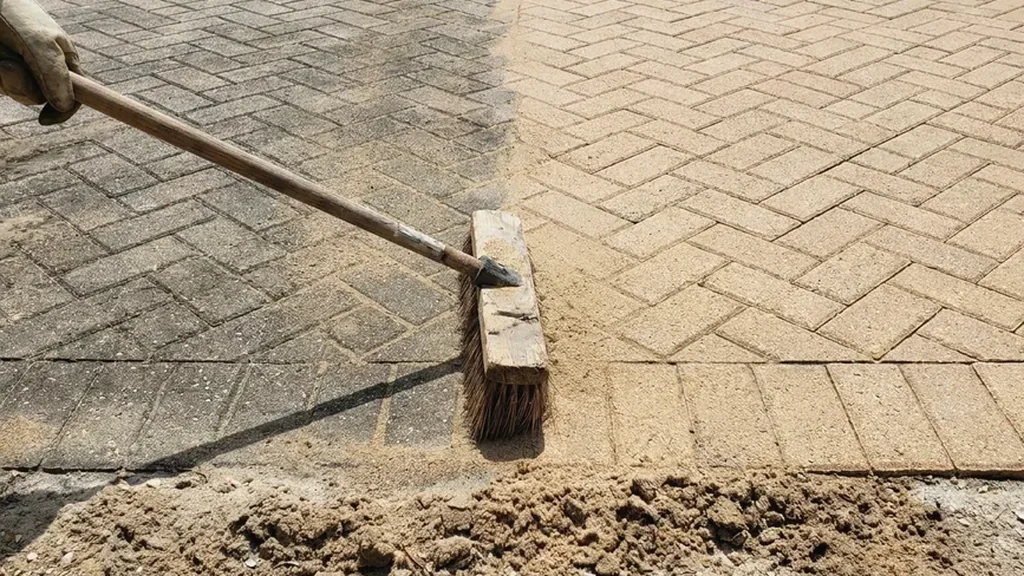
What paver problems show up most in Cocoa?
Gray pavers on homes that are decades old
The median home in ZIP 32922 was built in 1966, and 4,709 of its 8,417 homes date from the 1950s and 1960s. Pavers laid at those houses went in later, often during a remodel or a sale, so ages and sealer histories vary. A driveway from the 1990s and a patio from last spring can sit side by side. A Cocoa paver company says paver age and condition range widely in town. A wash shows what is on the surface, and that sets the plan. A drive that looks hopeless from the street often cleans up better than expected. A few pavers may still need to be replaced, which the contractor can point out before any sealer goes down.
Unknown sealer from a past owner
With nearly half the homes in this ZIP rented, a driveway may have had several owners and no records. With a solvent-based coat already down, a water-based sealer is off the table. Whatever is already down decides which sealer can go on next, so the contractor identifies it first. A patchy or peeling finish is a clue that the old product needs attention first. If the owner before you kept a receipt, bring it out; the product name saves guesswork. If nobody knows the old coat, a small test spot in a corner gives the answer.
Weeds where the joint sand has gone
A Cocoa paver company says fresh joint sand and sealer help discourage weeds but do not stop them for good. Lost sand lets joints widen, and soil settles in. Wet-season downpours can scour loose sand from open joints, which keeps the cycle going. After a wash, the sand has to be replaced before any sealer goes down. Plan to pull the odd weed between visits, even after a good job. A tight, full joint is a solid defense, which is why the sand step gets as much care as the coat.
Sunken pavers and a tired base
Cocoa has been built out in waves since the 1950s, and older drives can have low spots. The same Cocoa company says sealing does not repair settled pavers or a failed base. Sealer keeps a dip as it is, so a coat over a low spot only preserves it. Uneven areas get fixed first, and the estimate should say so. Walk the drive with the contractor and point out every spot where water pools or a paver rocks. Those spots tell the crew where to look closer.
Rain at the wrong moment
Sealer needs a dry surface, and a Brevard company says September through May brings lower humidity and less rain. Summer storms can still push a job back a day. Brevard County's wet season runs from June through November, so scheduling flexibility helps. Plan a spare day in case the first one is rained out. A Cocoa contractor plans around the forecast and does not seal damp pavers. Ask how the date will move if the sky turns. A good plan has a backup day and a clear call about when the crew will start. That keeps a dry morning from being wasted.
What kind of homes get paver sealing in Cocoa?
Mostly single-family houses from the 1950s through the 1980s, with pavers added later. ZIP 32922 counts 4,489 detached houses, 273 attached homes and 698 mobile homes among its 8,417 units. The median home was built in 1966. Share roughly when the house was built as you request a free estimate, which helps the contractor judge the joints.
Cocoa Village sits along Florida Avenue to Stone Street, ending at Riverfront Park on the Indian River. Indian River Drive is the slow county road that runs right beside the water. Brick and stone edging near older homes needs gentle rinse water, so call (321) 329-1122 and mention what your walkway meets.
Renters and owners are almost even here, with 3,506 owner-occupied homes and 3,211 rented ones in the ZIP. Rental owners can have the work scheduled around tenants, with the scope spelled out in writing. If you live in the house, you simply pick the finish. Either way, request a free estimate and ask about timing.
ZIP 32922 also holds 698 mobile homes, so some lots are small and some paver areas are only a walk or a patio. Sealing is priced by area, which means a small patio costs far less than a long drive. Give the contractor the size when you request a free estimate.
What does paver sealing cost in Cocoa?
Two Brevard companies list the same $1.85 to $4.00 per square foot, covering the wash, the new sand and the sealer. In Cocoa, size, access, surface condition, old coatings and stain treatment shape the total, according to a local company. A long driveway plus a back patio adds up to more area. To price your own layout, request a free estimate, and the estimate is free.
Rentals and older homes have their own price drivers. A driveway with no record of past sealer may need a test patch, and stained joints may need extra cleaning. Prep and sealing are separate visits, so expect two trips. Call (321) 329-1122 to learn which of these fit your property, with no obligation.
Weather can mean an extra trip. A Brevard company says September through May has lower humidity and less rain, so those months leave fewer gaps. A rained-out sealing day moves to the next dry one. To pick a window, request a free estimate.
| Paved area | Typical example | Clean, sand and seal |
|---|---|---|
| 300 sq ft | Small patio or walkway | $555 to $1,200 |
| 600 sq ft | Two car driveway | $1,110 to $2,400 |
| 1,000 sq ft | Large driveway or pool deck | $1,850 to $4,000 |
| 1,500 sq ft | Driveway plus pool deck | $2,775 to $6,000 |
Math based on the $1.85 to $4.00 per square foot that Space Coast paver companies publish. Your contractor sets the actual price after seeing the surface. Repairs, leveling and stripping failed sealer are usually extra.
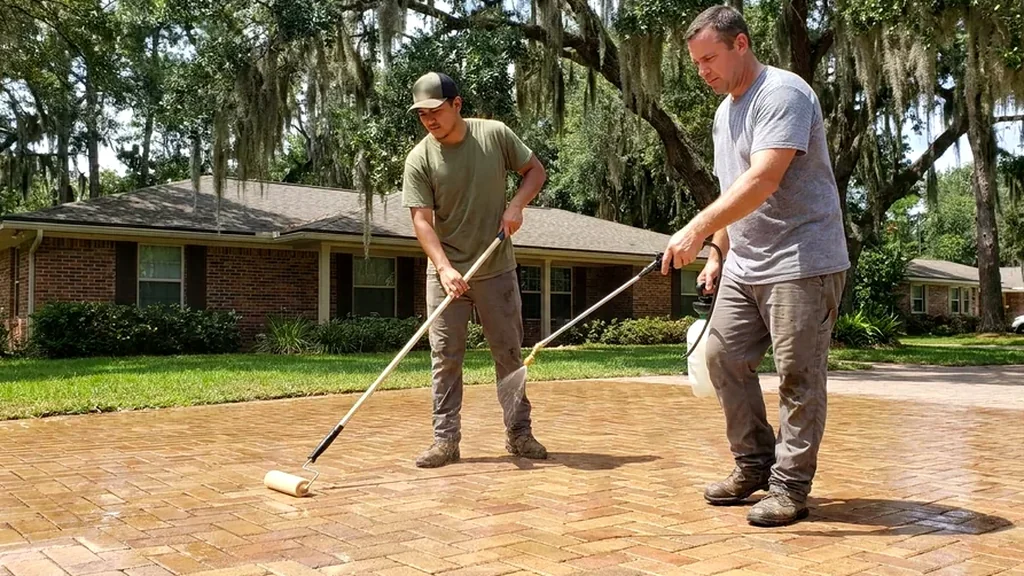
How does a paver sealing job work in Cocoa?
Inspect the pavers, joints and old coating
The contractor looks at the surface, the joints, any stains, and how water drains off your Cocoa lot. A Cocoa company says it also checks any old coating, the joints and stains before it writes up the scope. That inspection is how you get a quote that matches the work. If a past owner used a solvent-based sealer, that decides what can go on next.
Clean and treat the surface
Next the pavers are washed and rinsed, with algae treated where it shows. Rust and white mineral deposits get their own treatment. Rinse water stays away from siding and flower beds where it can, and gutters that spill onto a walkway get flagged. Older homes with brick trim call for the most care.
Clear the old sand and fill the joints
Weeds, dirt and failed joint sand come out, since washing pulls sand from the joints anyway. Fresh sand is brushed in and settled to the right level. Open joints let soil in and give weeds a start, so this step is not skipped. The sand also keeps neighboring pavers from rocking against each other. A 1960s driveway often needs more sand than a newer one, so ask how much is expected.
Let everything dry
Sealer needs a dry surface. Weather and moisture set the timing, and prep and sealing happen on separate visits. That gap gives the pavers time to dry all the way down. A Brevard company says September through May has lower humidity and less rain. Damp pavers wait, and the contractor holds the sealer back until they dry. A shaded patio near an oak can need extra hours to dry, even when the street looks dry.
Sealer in the finish you picked
Sealer goes on in thin coats, in the finish you picked. On a driveway with daily tires, a matte finish keeps scuffs quieter than a wet look. Companies commonly quote two to five years between coats, so ask what your sun and tires suggest. Mark the date on your calendar so the next coat does not slip. Ask for walk-on and drive-on times before the crew leaves. Keep sprinklers off the pavers until then, and move the cars out of the way ahead of time.
Complete paver services in Cocoa
Start with an inspection, because a 1950s walk and a new driveway call for different plans. The wash, fresh joint sand, a dry wait and the sealer follow in that order. The dry wait keeps moisture from being trapped under the coat. Call (321) 329-1122 to ask how many visits your lot needs.
Around Cocoa the surfaces split three ways. Driveways collect oil and tire marks, walks near the Village see foot traffic and leaf litter, and back patios stay shaded and green. You can request a free estimate and list what you have, so each area gets its own plan.
A Melbourne company puts film-forming sealers at about two to three years and penetrating ones at up to five. Matte tends to look calm on an older home with brick trim, while a wet look deepens color but shows scuffs sooner. Call (321) 329-1122 and ask which fits your Cocoa house.
One Brevard company says most jobs take one to two days when the weather cooperates, and the dry season gives the easiest window. No month is guaranteed, though, and rain can push a start back. For a date that suits your street, request a free estimate and ask what is open.
Questions to ask before you hire
- Can I get the quote in writing as a price per square foot?
- How soon can we walk on the pavers, and when can the car go back on the driveway?
- Can you take out the rust stains that irrigation water leaves on my pavers?
- Does the sealer hold up near salt air and daily sprinkler water?
- Is the sealer a film-forming acrylic or a penetrating type, and why that one for my pavers?
- Do you add joint sand after the wash, and what kind is it?
- Do you wash with a surface cleaner, or a bare wand that can blast the joint sand out?
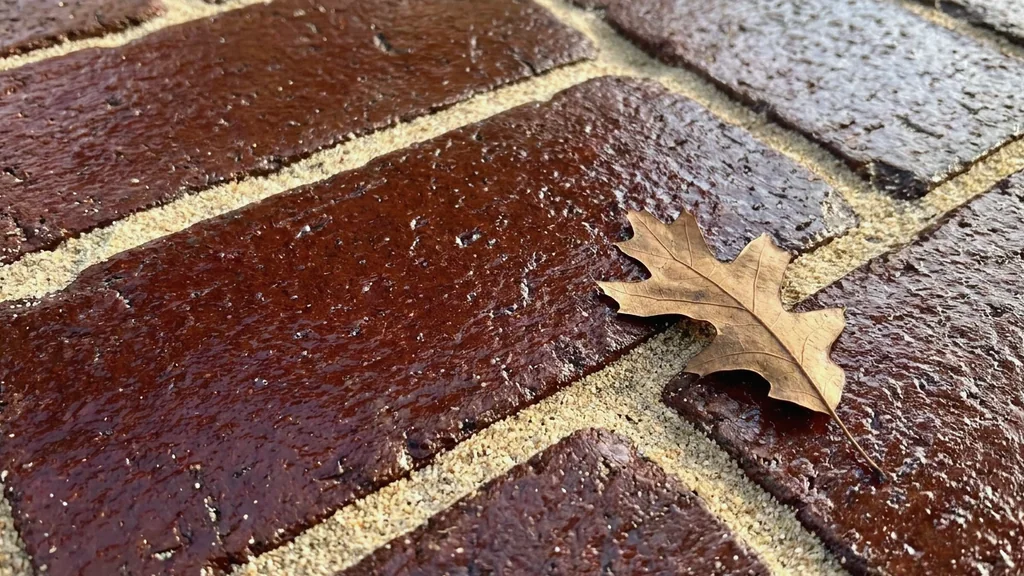
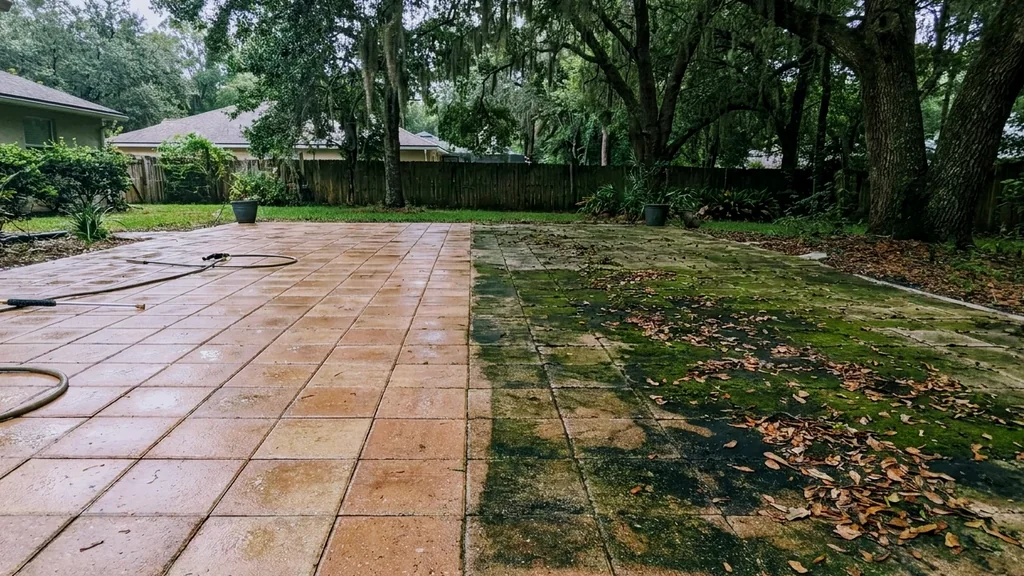
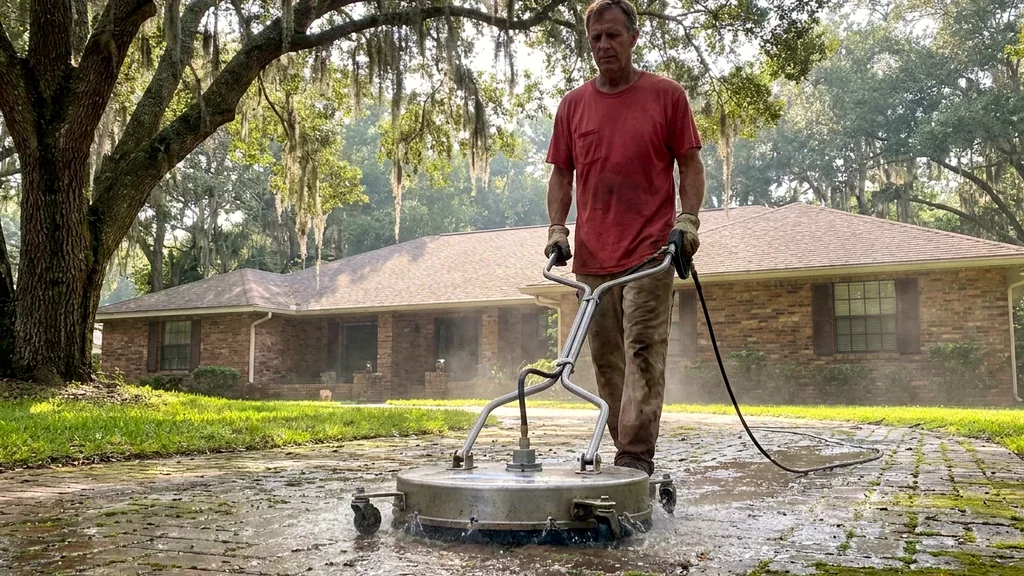
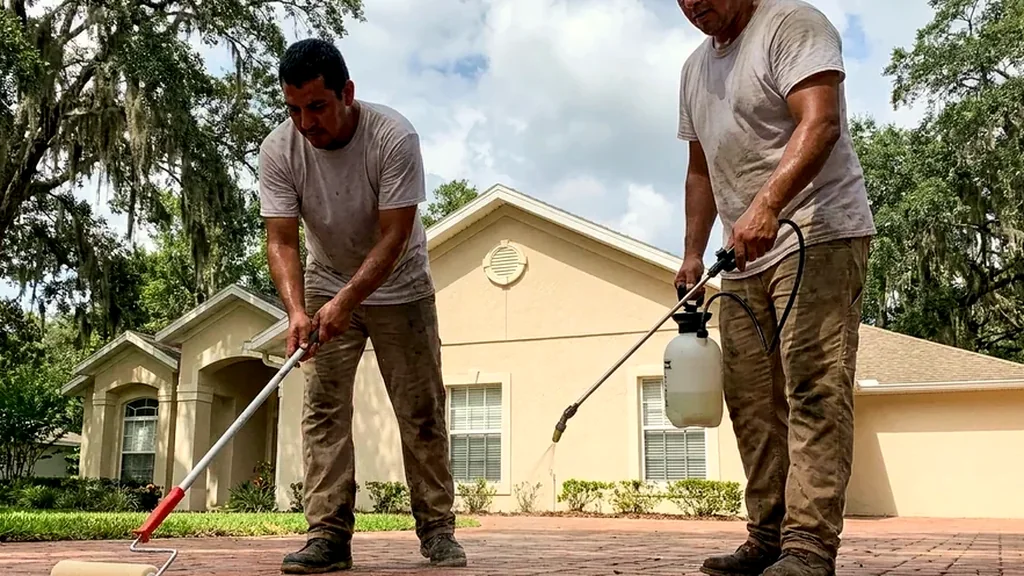
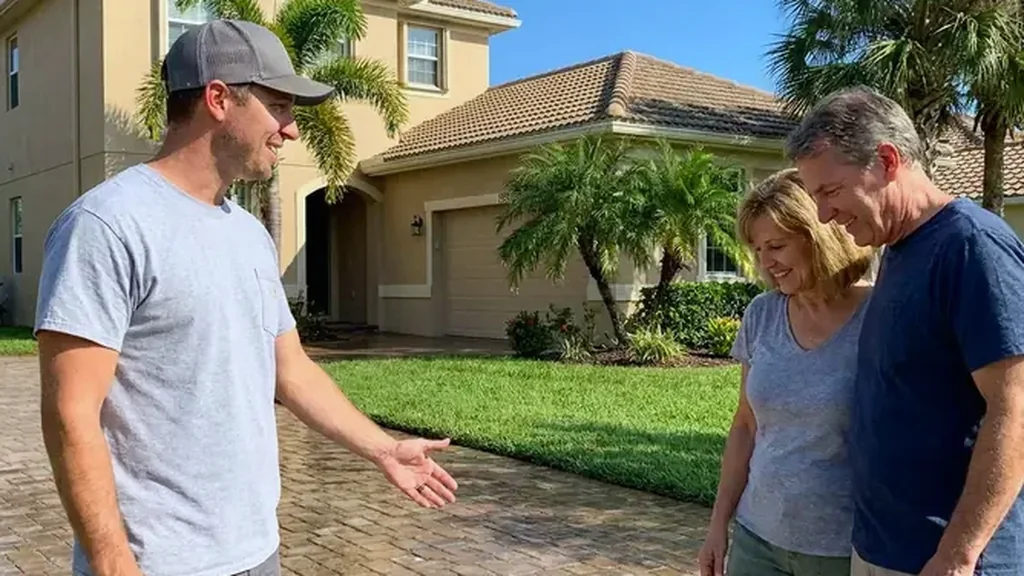
What do sealed pavers look like around Cocoa?
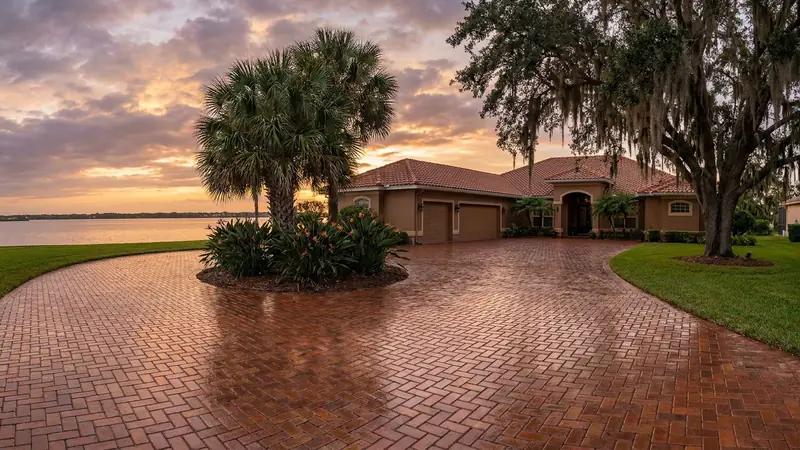
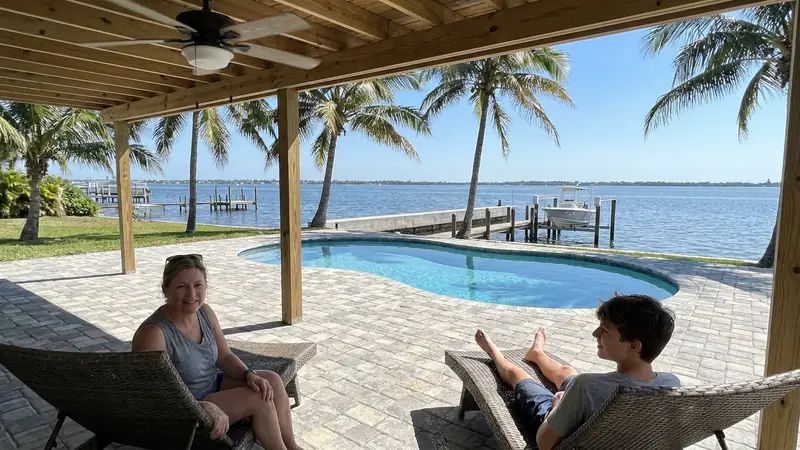
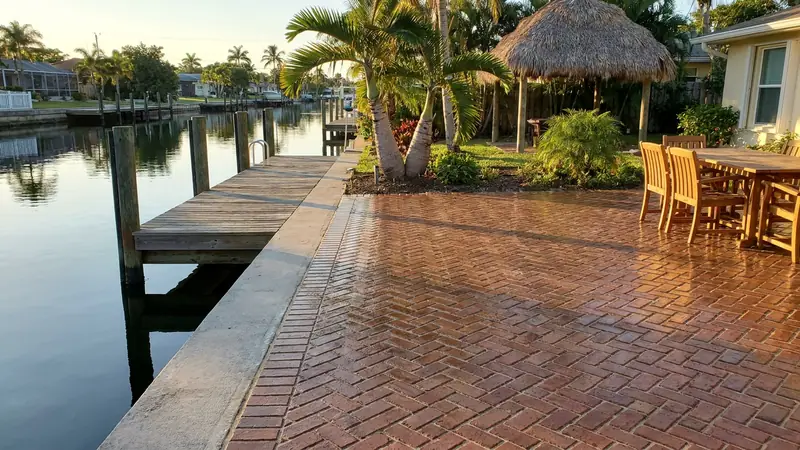
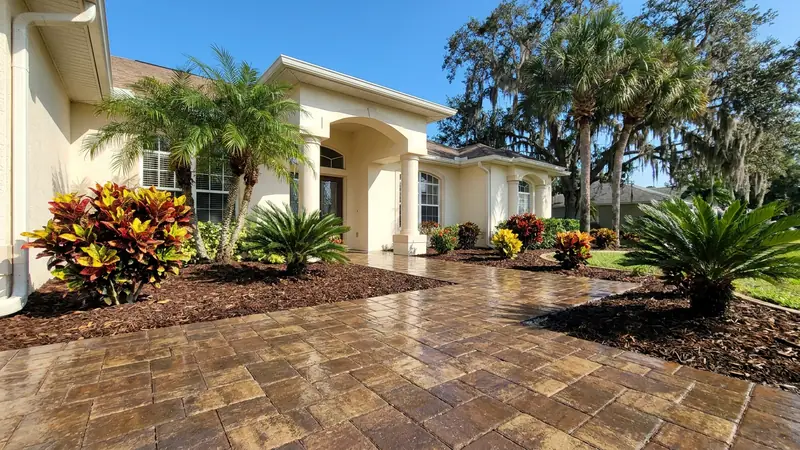
Why local matters in Cocoa
A contractor who knows Cocoa knows the housing came in waves, with the median home built in 1966 and newer pockets since. So two Cocoa driveways rarely share the same past. A local crew expects the mystery coat and plans for it. To speak with a contractor who works these Cocoa streets, call (321) 329-1122.
Landlords add another layer. With 3,211 rented homes in the ZIP, many jobs are ordered by an owner who lives elsewhere. A contractor used to that handles access, notice to tenants and a clear written scope. If you manage a Cocoa rental, request a free estimate and say so up front.
Water matters here too. Cocoa runs a water system that draws on aquifers and the Taylor Creek Reservoir and serves many nearby towns. A crew that works Cocoa often will ask whether your yard irrigates from the city line or a private source, since that helps predict stains. Dial (321) 329-1122 and ask the contractor how that is handled on your street.
About 13.46 percent of the 15.4 square miles inside Cocoa is water. Pavers close to the Indian River sit in damper air than inland ones do. A crew used to the area plans extra dry time near the water. When you request a free estimate, say how close you are to the river.
Does it help to hire someone who knows Cocoa Village and Indian River Drive?
Yes, because the oldest parts of town sit beside the river and have their own rhythm. Cocoa Village runs from Florida Avenue to Riverfront Park, and the historic Cocoa Post Office from 1939 holds the Florida Historical Society. A fire in 1890 and the Great Freeze of 1894 shaped the town before it was chartered in 1895. Near the Village, call (321) 329-1122 and name your street.
Clearlake Road and US 1, known as Cocoa Boulevard, are main roads through the neighborhoods. A water tower painted with American flags in 1976 is a local landmark. Indian River Drive is a slow residential road that runs beside the river. If your house is near any of these places, request a free estimate.
Cocoa grew from 3,098 people in 1940 to 12,244 in 1960 once the space industry arrived. That growth fits the 1950s and 1960s homes the Census counts here, 2,560 and 2,149 of them. If yours is one, call (321) 329-1122 and say roughly when it went up.
Frequently Asked Questions
How much should I pay for paver sealing in Cocoa?
Expect $1.85 to $4.00 per square foot for the wash, new sand and sealer, as two Brevard companies publish. A Cocoa job lands inside it based on size, access, old coatings and stains. Pool decks and long driveways add area, so the total goes up even when the rate holds. Small walkways and steps are quick, and the contractor can bundle them with the main job. Get the total area in writing, and every bid can be compared on equal terms.
How often do Cocoa pavers need resealing?
Companies commonly quote two to five years before a new coat, so mark your calendar. Driveways with daily tires sit toward the short end. Check the color each spring; dull or blotchy pavers are a fair signal that a new coat is due. Pavers that still look rich and even can often wait another season.
Is it better to spray or roll paver sealer in Cocoa?
Either can work if the coats are thin and even. A Melbourne company says thin coats help avoid puddling, which leaves uneven shine. Ask the contractor how the sealer will be applied and how many coats you will get. Two coats are common, with the first allowed to dry before the second goes on.
Is there a downside to sealing pavers in Cocoa?
There are limits. A Cocoa company says sealing does not permanently stop weeds and does not repair settled pavers. Sealer also wears, so it needs a new coat later, and a wet look shows scuffs sooner than matte. Each of those is manageable when you plan for it. Knowing that up front keeps surprises small.
How long do paver sealers last in Cocoa?
A Melbourne company says film-forming sealers give about two to three years of service, while penetrating sealers can last up to five. Foot and vehicle traffic shorten that, and so does a lot of sun on an open drive. Ask which type is going on your pavers and why. The answer should fit your traffic, your sun and the look you want.
Can older pavers in Cocoa still be sealed?
Often yes, if the pavers are sound. A Cocoa company notes that sealing cannot fix a failed base, so condition gets checked first. Many Cocoa homes date from the 1950s and 1960s, so ask for that check in the estimate. A written note on base and joint condition helps if you ever sell.
Who orders paver sealing at a rental home in Cocoa?
The property owner does. About 3,211 homes in ZIP 32922 are rented, so landlords are common. Pass along the tenant's contact for access, agree on a time window, and name one person to approve the scope. Keeping the owner, tenant and contractor on one email thread helps avoid missed dates.
How long will a paver sealing job in Cocoa take?
Most projects run one to two days according to a Brevard company, and rain can push that back. Prep and sealing are separate visits, and the surface must dry in between. Ask for a day when no rain is in the forecast. If the first coat gets rained on, the contractor decides whether to wait or redo it.
Can I seal pavers in Cocoa during the cooler months?
Often yes. A Brevard company says September through May offers lower humidity and less rain, which helps sealer dry. The contractor still waits for a surface that is dry to the touch. Ask for a day with a dry forecast and a spare day behind it.
What steps does a Cocoa paver sealing job include?
A Brevard company's Cocoa page lists pretreating and surface cleaning the pavers, treating efflorescence, re-sanding the joints and applying two coats of sealer. Efflorescence is the white mineral haze that can rise to the surface. Ask whether each step appears in your quote.
Ready for a Free Estimate in Cocoa?
Call (321) 329-1122 and tell us about your pavers.
Free, no obligation