
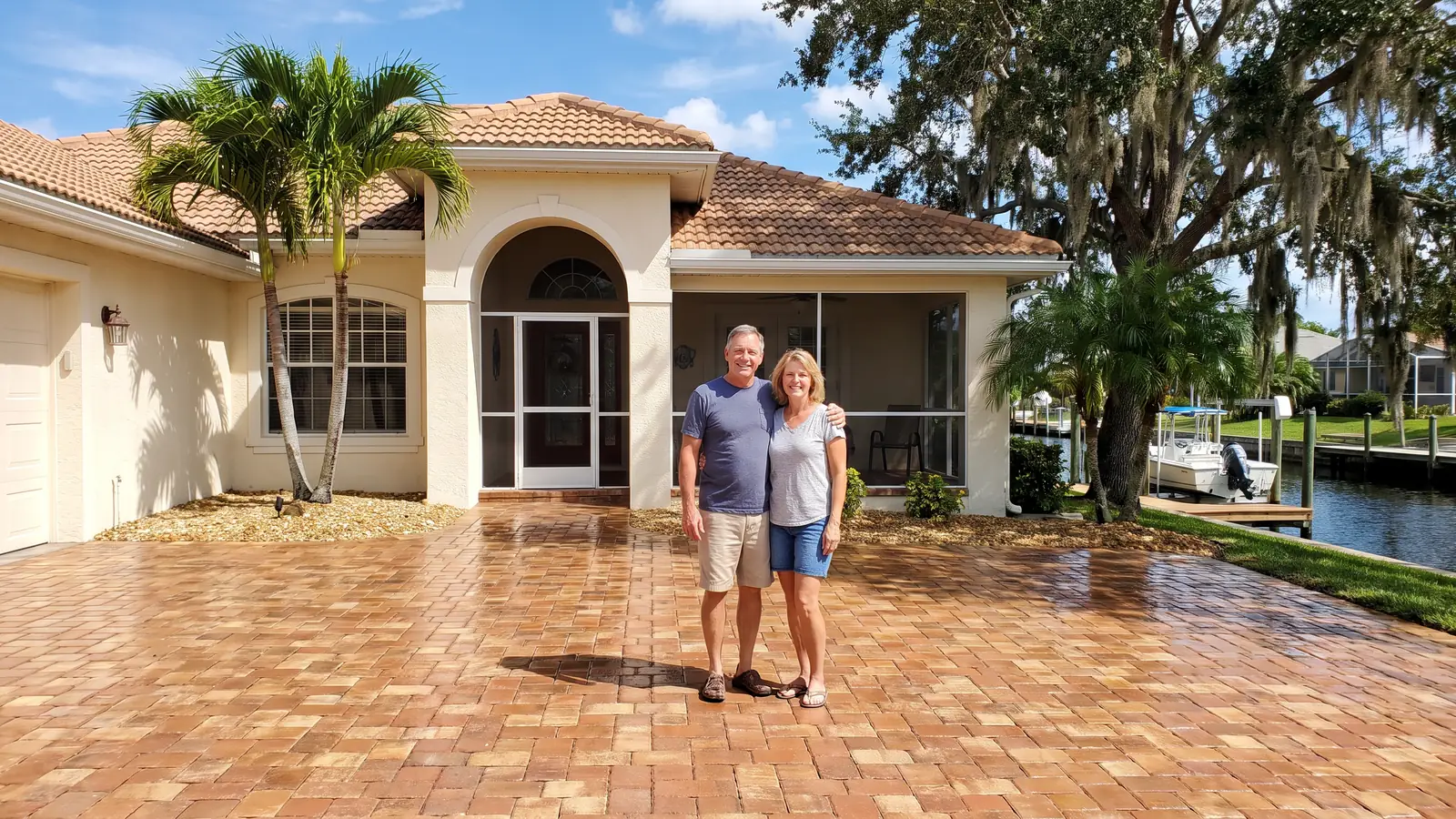
Paver sealing for Melbourne Beach homes
Paver Sealing in Melbourne Beach, FL
Between the Indian River and the Atlantic, Melbourne Beach pavers can be sealed again, so call (321) 329-1122 today.
- Brings out deeper paver color
- Fresh joint sand helps lock pavers in place
- Gives weeds less room to grow
- Makes the surface easier to keep clean
- Free estimate, no obligation
Request a Free Estimate
Free, no obligation.
Fast, careful paver sealing in Melbourne Beach
Paver sealing in Melbourne Beach starts with a free estimate from a local contractor, who washes, re-sands and seals driveways, patios, walkways and pool decks. Islanders who write in hear back inside a business day, and no one is asked to commit. Beginning is simple: request a free estimate.
Picture the patio behind a beach house with a pale crust of salt dust, green film in the shady corner and thin joints along the edge. Wash it, re-sand it and seal it, and the color comes back while the surface rinses clean more easily. Call (321) 329-1122 to describe your patio or drive.
Melbourne Beach counts about 1,595 homes and condos, so a short first call can cover a lot. Say which street you are on, what the pavers are made of and whether anyone has sealed them. Write those details in the note when you request a free estimate.
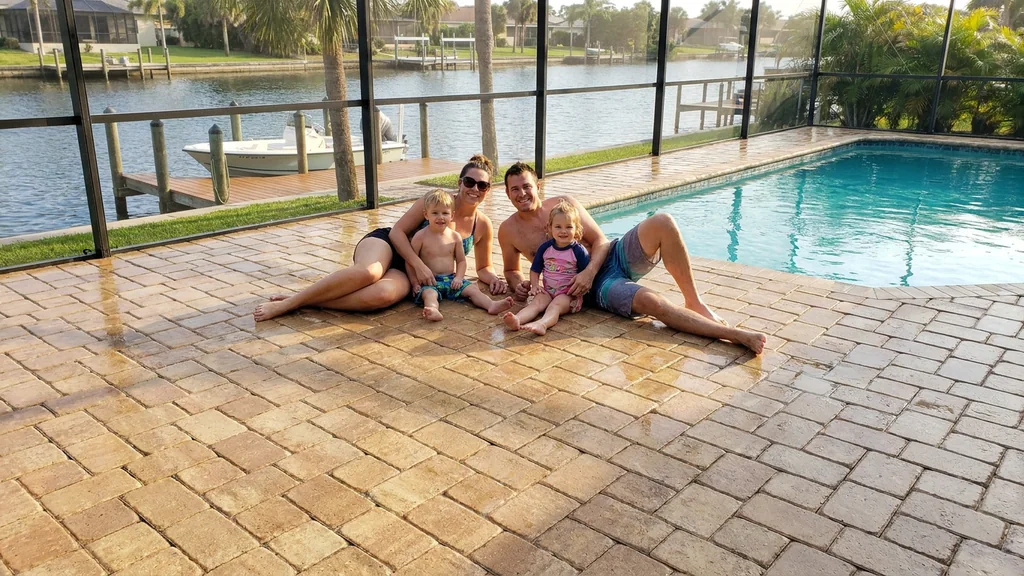
Why hire a local paver sealing contractor in Melbourne Beach?
Melbourne Beach sits on a barrier island with the lagoon on one side and the Atlantic on the other, so salt, sand and humidity all reach the pavers. To hear how that changes a job at your address, request a free estimate.
Seen first, priced second
A local contractor looks over your Melbourne Beach pavers at no charge before any price is agreed.
A range to measure by
Ask for the area and the rate in writing, then set that rate beside the county range in the pricing section. Measure island bids against it.
Planned for salt air
Beach conditions mean salt, sand and damp air. The contractor can explain what that changes for your pavers.
Finish after a sample
Choose matte or a wet look once you have seen a sample. The estimate is free and carries no obligation.
Get Your Free Estimate in Melbourne Beach
Tell us about your pavers in Melbourne Beach.
Free, no obligation
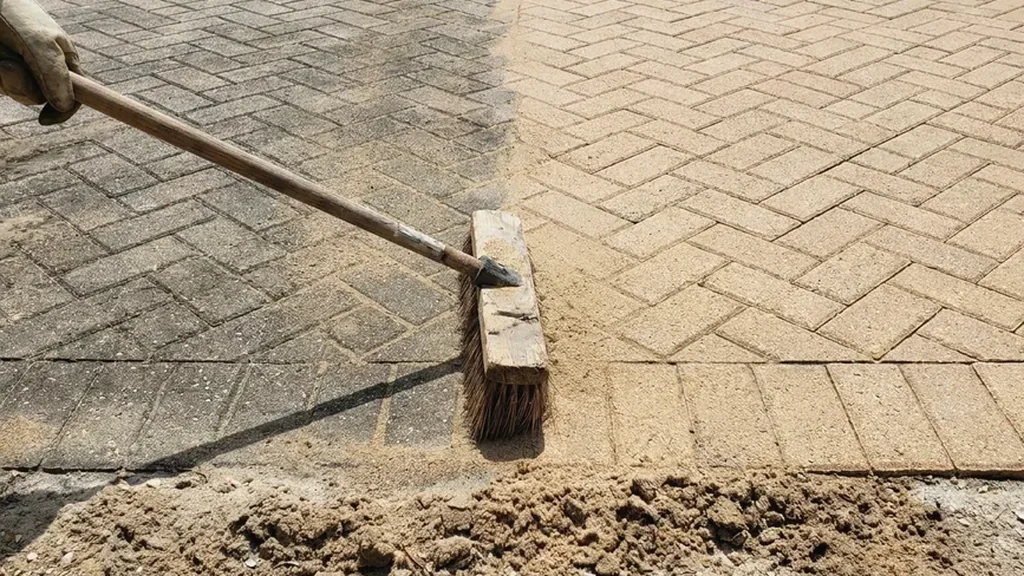
What paver problems show up most in Melbourne Beach?
Salt spray and sandy soil
University of Florida extension says coastal Florida has inescapable salt, sandy soil and strong winds. A Brevard paver company adds that unsealed pavers are especially prone to sun damage and fading in the county's humid, salt-air climate. On the island, salt dust settles on patios and driveways, which means a thorough wash matters before any sealer goes on. Sealer applied over salt dust and grime would seal the dirt in, and the pavers would look dull right after the job.
Sandy ground and heavy rain
Melbourne Beach gets about 46.5 inches of rain a year, and September is the wettest month at 7.55 inches. Sandy ground drains fast, and poor drainage can wash bedding sand out from under pavers. Low joints let soil in as they widen. Joints get refilled with new sand after the wash and ahead of sealer. A patch where weeds keep coming back every summer marks thin sand.
Damp air from the lagoon and the ocean
With water on both sides of the island, the air stays humid. A Brevard company says high humidity lengthens drying time and can interfere with curing. Moss, lichens and algae usually need heavy shade and constant dampness to take hold on pavers. A shaded sidewalk can turn green even in strong sun.
Pool decks and lanai floors
Some island homes have a pool or a lanai. A Brevard company says pool decks need a sealer rated for chlorine, salt water, UV and moisture. Sealing does not make pavers slip-proof, and wet surfaces still need care. Travertine often gets a traction-additive coating, so tell the contractor what your deck is made of. Concrete pavers, clay brick and travertine each get a different plan.
Older coats on older homes
Melbourne Beach goes back to the Oak Lodge hotel of 1879 and incorporated in 1923. The median age in town is 52, so some homes have been owned a long time. Someone before you may have used a product that never got written down. Because water-based sealer cannot go over solvent-based sealer, the contractor must find out what is on the surface first. Flaking or hazy spots are the first clue, and an old receipt can settle it.
Does a Melbourne Beach home near Ocean Avenue need different sealing than one near the river?
Often yes, since the island is narrow and each side gets different weather. Homes nearer the ocean tend to see more salt spray and wind, and homes nearer the lagoon sit beside open water too. The Town Complex is at 507 Ocean Avenue, and Indialantic borders the town to the north. When you request a free estimate, say if you are nearer the ocean or the lagoon.
Coconut Point Park is a 36.9-acre beachside park and sea turtle nesting site, and Ryckman Park sits close to the old Town Hall. Homes near either park are close enough to the water to feel salt and wind. A walk around your own property shows where the sun hits and where the shade stays damp. Call (321) 329-1122 and describe both.
The Archie Carr National Wildlife Refuge protects 20.5 miles of beach and shoreline, and its Barrier Island Center is on South Highway A1A in Melbourne Beach. Living this close to protected land means ocean air and sand carry well past the dunes. If your pavers sit within a short walk of the water, request a free estimate and say so.
A statue of Juan Ponce de Leon stands at the landing named for him, though his 1513 landing site is disputed, and the Melbourne Beach Pier is another landmark on the water. Homes near the pier or the landing sit steps from open water, so salt reaches the pavers more directly. If your home is near the water, request a free estimate.
What does paver sealing cost in Melbourne Beach?
Companies across Brevard County list $1.85 to $4.00 per square foot for the whole clean, sand and seal job. A Melbourne Beach quote moves within that span with paver condition, sealer, access and any old coat. For a price on your island patio or drive, request a free estimate.
Area drives the total, and small lots keep it modest. A patio, a walkway and a driveway add up, while a large pool deck pushes it higher. One Melbourne company names area, condition, joint condition, access and old sealer as the cost factors, and you can call (321) 329-1122 to talk them through.
Salt and damp can add prep time. Salt dust, green film and rust marks take extra washing, and low joint sand takes extra sanding. Send a few photos when you request a free estimate; sound pavers usually price nearer the low end.
| Paved area | Typical example | Clean, sand and seal |
|---|---|---|
| 300 sq ft | Small patio or walkway | $555 to $1,200 |
| 600 sq ft | Two car driveway | $1,110 to $2,400 |
| 1,000 sq ft | Large driveway or pool deck | $1,850 to $4,000 |
| 1,500 sq ft | Driveway plus pool deck | $2,775 to $6,000 |
Math based on the $1.85 to $4.00 per square foot that Space Coast paver companies publish. Your contractor sets the actual price after seeing the surface. Repairs, leveling and stripping failed sealer are usually extra.
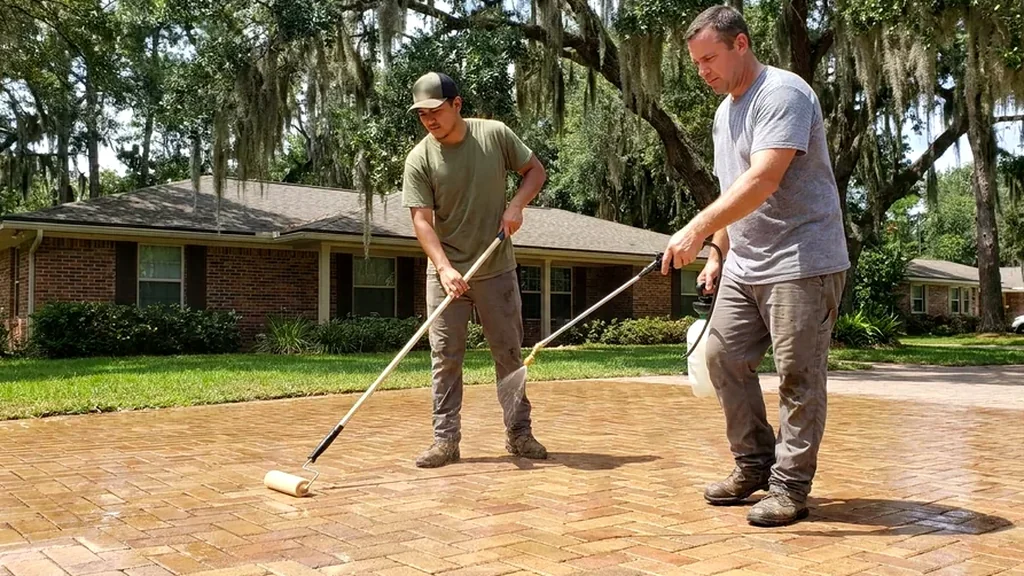
How does a paver sealing job work in Melbourne Beach?
Look and ask
At the first walk-through, the contractor checks your Melbourne Beach pavers for sunken spots and asks about past sealing. Sunken pavers are lifted and reset first, because sealer over a dip only keeps it. The contractor also checks what coat, if any, is already down. Joint sand matters too, since a Brevard pressure washing company says sealing reduces loss of joint sand and deters ants from nesting in it.
Wash off salt and green
Cleaning lifts salt dust, green film, oil and dirt. Rust gets its own treatment, and one Brevard company rinses with hot water and an algaecide. A narrow, hard spray can scatter joint sand, so pressure and nozzle choice matter. Ask where rinse water goes, because the lagoon is close.
Refill the joints
Because a wash removes sand from the joints, they are refilled before sealer touches the surface. A Brevard company wet-sands the joints, then dry-sweeps the surface before it moves on. Joints that stay full hold up better across the wet months, which average about 138 rain days a year here.
Wait for a dry window
Island air stays humid, and a Brevard company says high humidity lengthens drying and can interfere with curing. September through May has less humidity and rain. The contractor watches the forecast and picks a dry window.
Seal and let it cure
The sealer goes down in the finish you chose, often as two coats. Wet-look finishes scuff visibly sooner than matte, and quoted spans between coats range from two to five years. A Brevard company gives 48 hours for full cure and 72 hours before cars drive on it, and says most jobs take 1 to 2 days.
Complete paver services in Melbourne Beach
On the island the day starts with salt. Dust and spray get washed off first, the joints are refilled, the pavers dry and sealer goes down last. Shade and old coats are checked before any of that begins. To ask how long each stage might take at your address, call (321) 329-1122.
Island homes often have several surfaces. One drive bakes in the sun, a walkway gets gritty with sand, and a pool deck sees chemicals and salt water. List every surface when you request a free estimate.
Sealer choice starts with what is already down. Finish comes next. Matte stays natural and semi-gloss deepens color. Call (321) 329-1122 to talk through which finish suits a beach house, a lanai floor or a drive.
Weather sets the pace. Brevard County's wet season stretches from June through November, with September wettest in town. A storm can move your date because sealer needs dry pavers. Dry spells come and go on the island, so request a free estimate and ask about timing.
Questions to ask before you hire
- Does the sealer hold up near salt air and daily sprinkler water?
- Is the sealer a film-forming acrylic or a penetrating type, and why that one for my pavers?
- What do you do when afternoon rain is in the forecast on the day of the job?
- Can you take out the rust stains that irrigation water leaves on my pavers?
- Do you wash with a surface cleaner, or a bare wand that can blast the joint sand out?
- Does the estimate cover a second visit if the sealer needs a touch-up?
- Will you treat the green algae and black mildew before you seal?
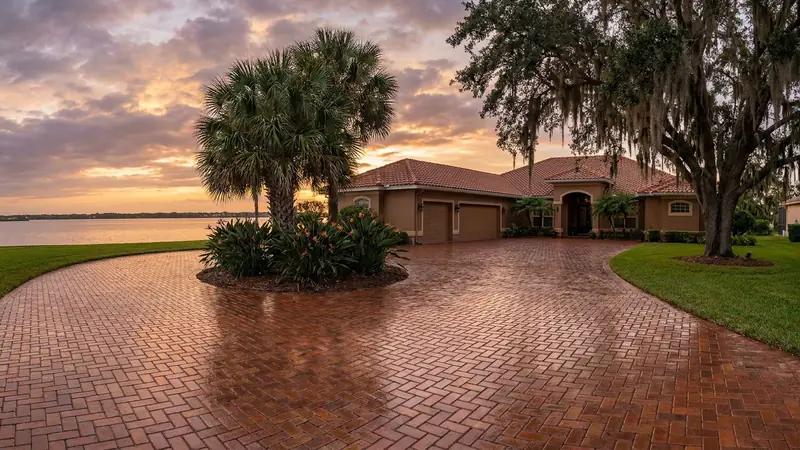
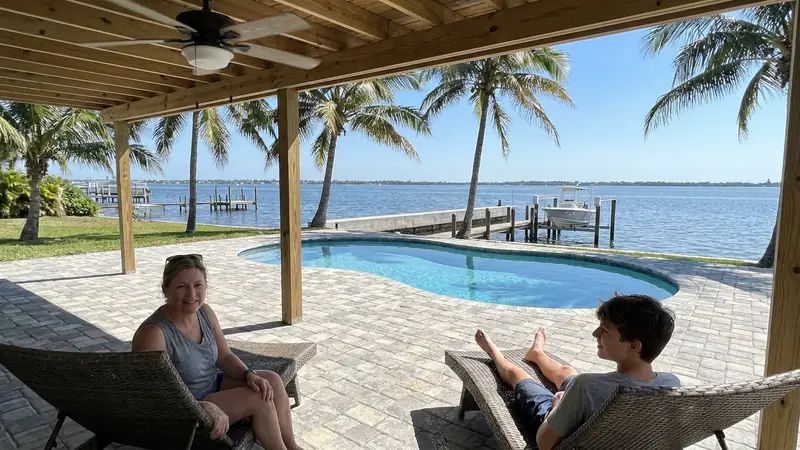
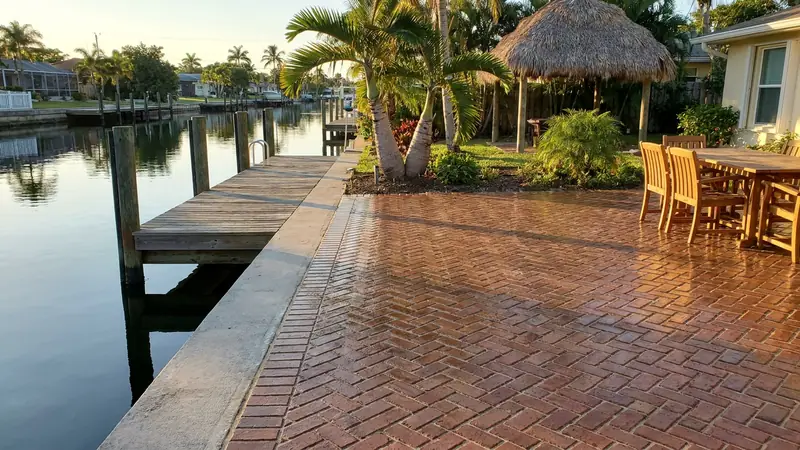
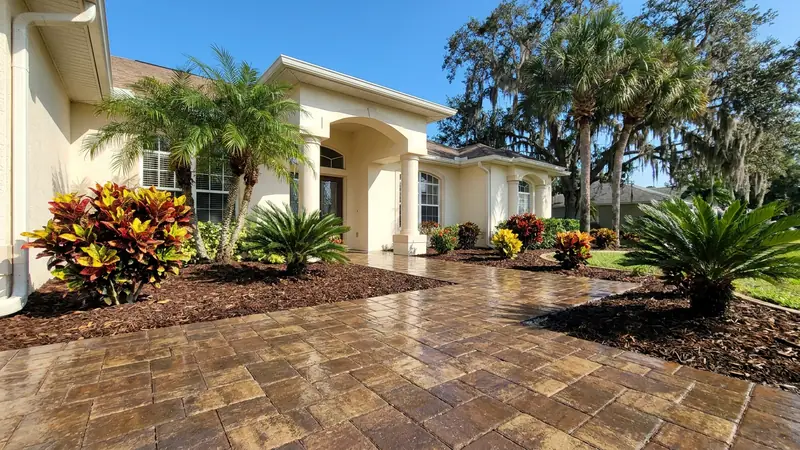
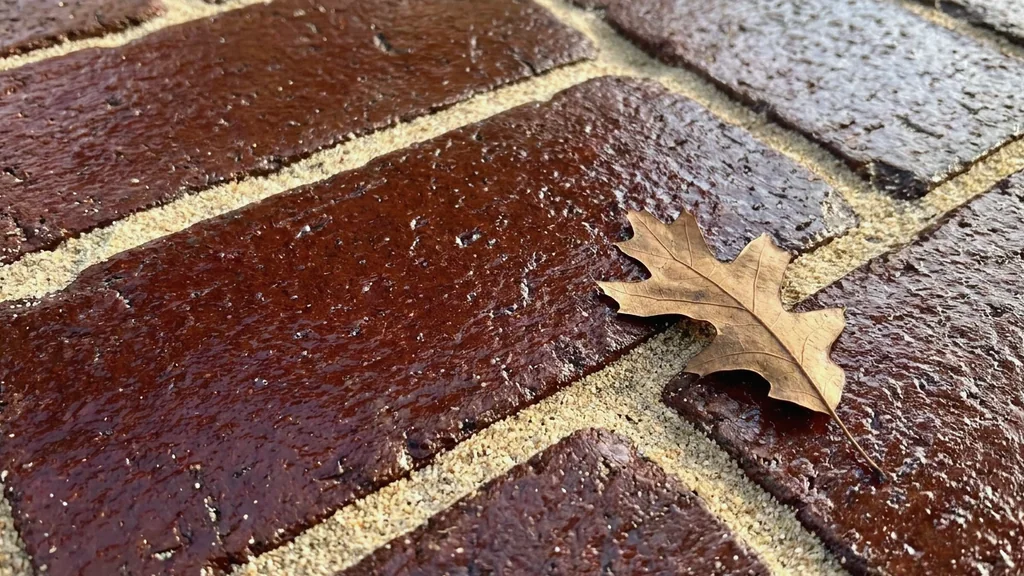
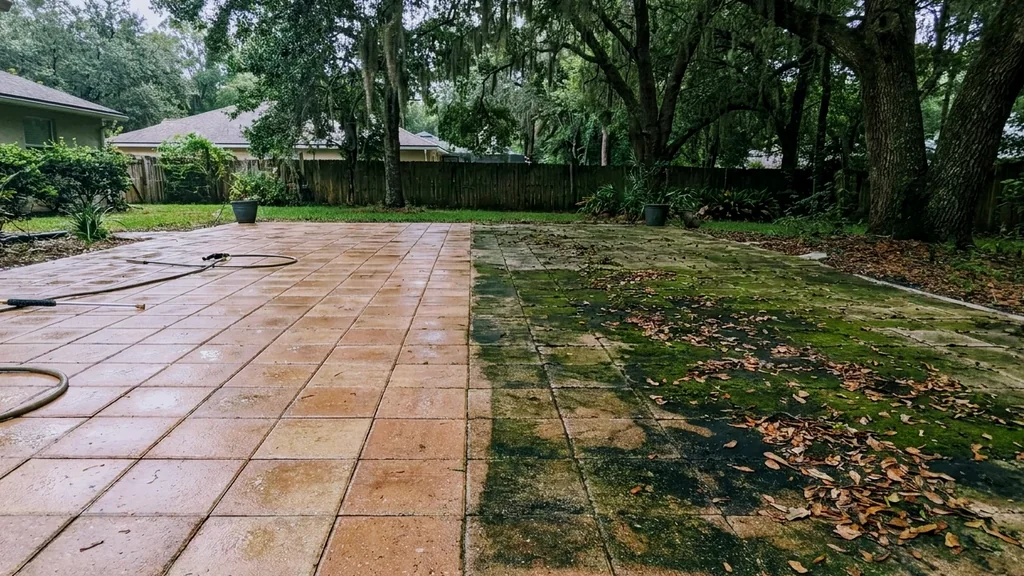
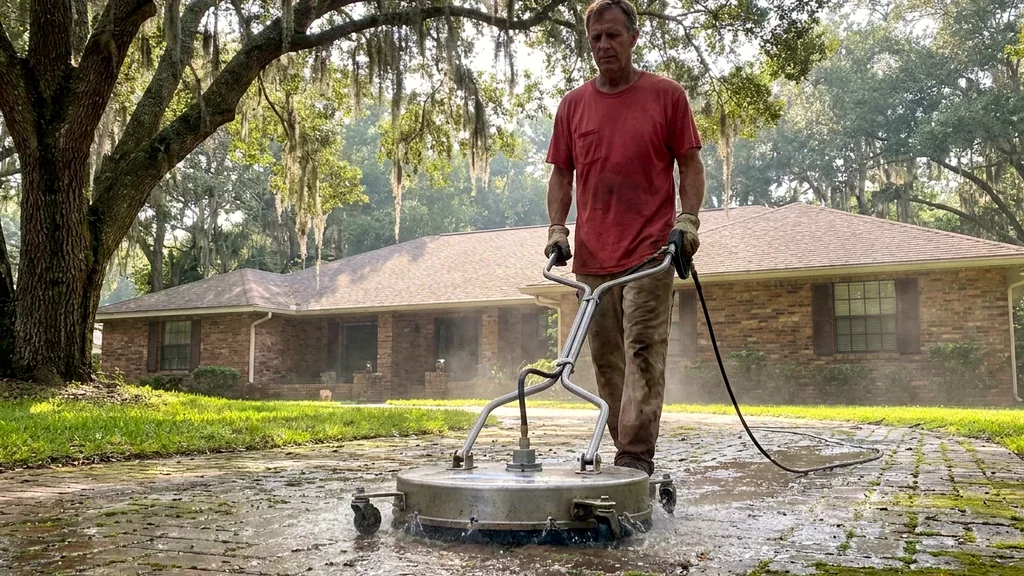
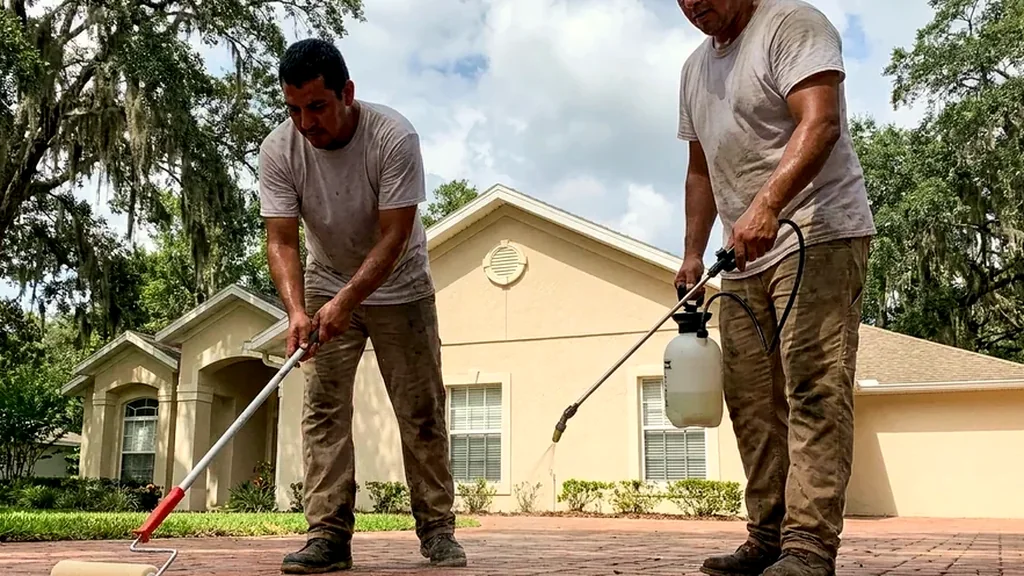
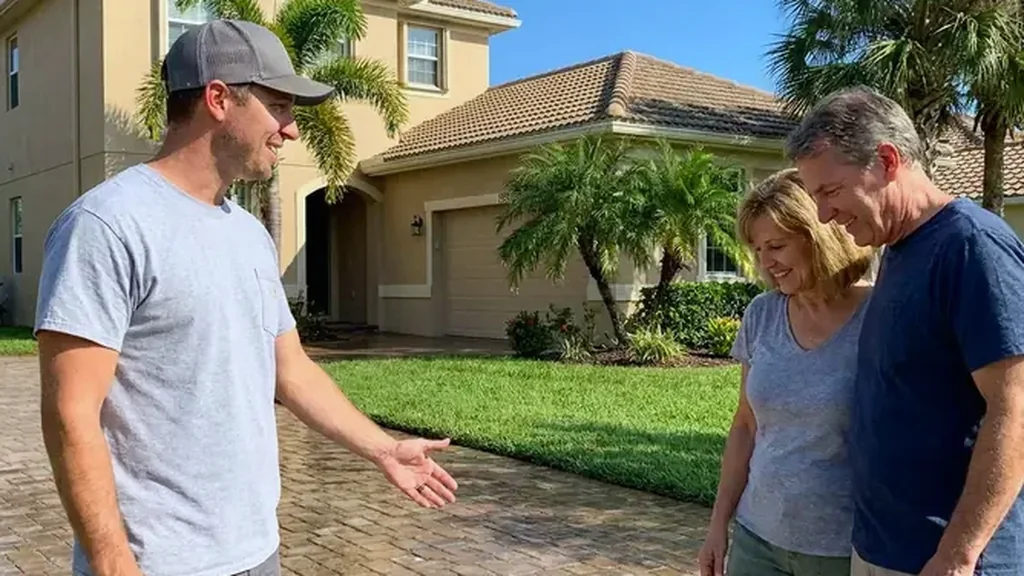
What do sealed pavers look like around Melbourne Beach?
Why local matters in Melbourne Beach
A contractor who works on the barrier island knows salt, sand and humidity all reach the pavers, and that the lagoon is close enough to matter for rinse water. That shapes how the wash and sealing day go. To reach a contractor who works on the barrier island, call (321) 329-1122.
Local work also means knowing the town. Melbourne Beach covers only about one square mile of land, so homes are close to one another. Gear gets carried, cars get moved and neighbors share fences, so access and care matter. Mention anything that makes access tight when you request a free estimate.
Island weather sets the timing: rain falls mostly in one long wet season, and the air keeps humidity high. A contractor here plans around dry stretches, not the calendar. Call (321) 329-1122 for a look at how a sealing day could go on your street.
How did Melbourne Beach grow from a hotel site into a small town?
It started with the Oak Lodge hotel, built in 1879 on a 164-acre site near Aquarina. The Melbourne Causeway, built in 1921, tied the island to the mainland through Indialantic, and the town incorporated in 1923. If your home is among those older streets, request a free estimate.
The town calls itself Brevard County's oldest beach community, established 1883. Old Town Hall, a roughly 100-year-old building, is now the History Center, and the Melbourne Beach Pier is another landmark. If your home is near any of these, call (321) 329-1122 and say which street.
Melbourne Beach also sits beside protected turtle nesting beaches. Coconut Point Park is a sea turtle nesting site, and the Archie Carr refuge protects 20.5 miles of shoreline nearby. If your pavers are close to the dunes, request a free estimate and mention it.
Shorebirds such as black-bellied plovers and gannets, and in winter red knots, use the beaches nearby. Their presence is a reminder that this is a living shore, so a contractor working here should keep wash water and sealer away from the dunes and the lagoon. Call (321) 329-1122 and mention if your pavers sit close to the dune line.
Frequently Asked Questions
How much does it cost to seal pavers in Melbourne Beach?
The published range is $1.85 to $4.00 per square foot for cleaning, sanding and sealing. A beachside quote shifts with wear, access, sealer and the coat already down. Have the quote name each surface and its size so the math can be checked. Written quotes also let you set two bids side by side.
How often should you reseal a Melbourne Beach patio?
A Brevard company suggests resealing every 2 to 3 years and says a coat lasts 2 to 4 years in Florida. Quoted spans between coats range from two to five years. Sun, salt air and heavy traffic argue for sooner. Fading, stains or weeds in the joints are the signs to watch. Cloudy or patchy sealer is one more sign it has worn thin.
Is it better to spray or roll paver sealer in Melbourne Beach?
Either method can work when the surface is clean, sanded and dry and the coverage is even. What matters more is the prep and the product. Ask the contractor which method is planned, how coverage is checked and whether the sealer is water-based or solvent-based.
Is there a downside to sealing pavers in Melbourne Beach?
Sealer wears out in time, and gloss shows scuffs sooner than matte. Sealer will not stop normal fading. Dry pavers are required, so humid island weather can slow the job and move the date. A wrong product or a poor application can leave a white film that must be redone.
Does salt air shorten how long sealer lasts in Melbourne Beach?
One Brevard company says unsealed pavers are especially prone to sun damage and fading in the county's humid, salt-air climate. Sealer lasts 2 to 4 years in Florida depending on product, application and exposure. High-traffic areas wear faster, so ask the contractor how often to check yours.
Can a pool deck at a Melbourne Beach home be sealed?
Yes, with a sealer rated for the job. One Brevard company says pool decks need a product that protects against chlorine, salt water, UV and moisture. Travertine often gets a traction-additive coating. Wet outdoor surfaces still need care.
How should I get my Melbourne Beach patio ready for a sealing visit?
Move furniture, grills and planters off the pavers if you can, and point out sunken spots, rust marks and areas where water collects. Tell the contractor where the sprinklers spray and whether anyone has sealed the surface before. That information helps the quote match the work. Photos of each area are a good addition to your request.
Will sealing bring back color on faded Melbourne Beach pavers?
Sealing can deepen color, especially with a wet look, but it does not stop normal fading. A Melbourne company notes that Florida sun still changes paver appearance over time. Ask to see a finish sample, and decide how much shine you want.
Which parts of Melbourne Beach can get paver sealing?
Homes across the town can, from the streets near Ocean Avenue to the lagoon side. The town covers about one square mile of land, and Indialantic borders it on the north. Give the contractor your street and say which side of the island you are on.
Does living near the dunes change which sealer I should pick?
It can. Salt spray, sandy soil and strong winds are part of coastal life, and one Brevard company says unsealed pavers are especially prone to sun damage in this climate. Ask which product suits coastal exposure, and whether it is rated for pool areas if you have one.
Are island pavers harder to seal in summer?
Humidity is the main issue. A Brevard company says high humidity lengthens drying and can interfere with curing. The wet season runs June through November, and September is the wettest month in town at 7.55 inches, so the contractor picks a dry window.
What should I tell the contractor about my Melbourne Beach home?
Share your street, the paver material, whether anyone sealed it before and where the sprinklers spray. Mention a pool or lanai and any spots that stay damp. Those details help the quote match the work.
Ready for a Free Estimate in Melbourne Beach?
Call (321) 329-1122 and tell us about your pavers.
Free, no obligation