
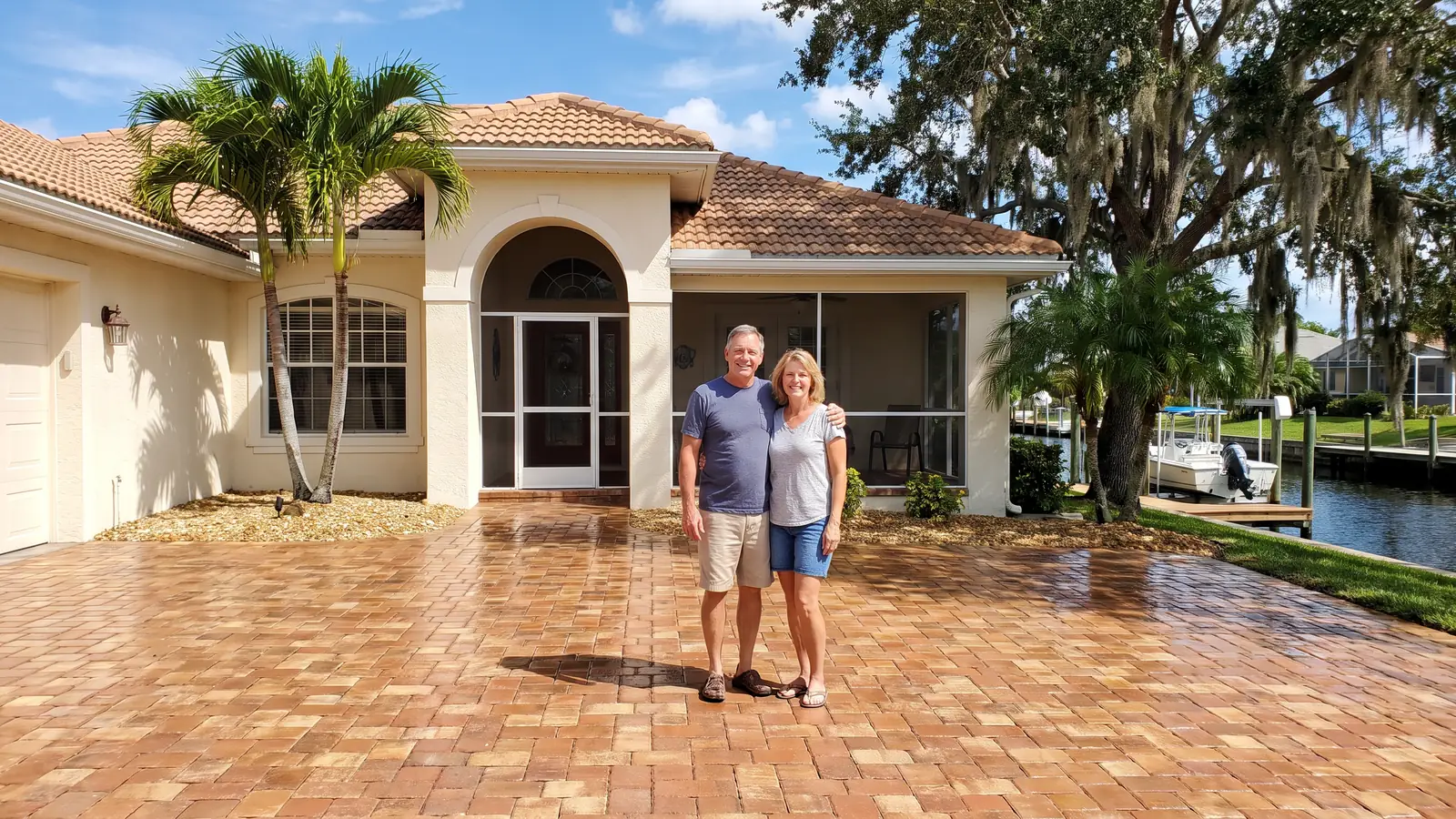
Paver sealing for Port St. John homes
Paver Sealing in Port St. John, FL
From Nicol Park to Fay Lake, Port St John pavers can look new again, so call (321) 329-1122.
- Brings out deeper paver color
- Fresh joint sand helps lock pavers in place
- Gives weeds less room to grow
- Makes the surface easier to keep clean
- Free estimate, no obligation
Request a Free Estimate
Free, no obligation.
Fast, careful paver sealing in Port St. John
Homeowners in Port St John can book paver sealing with a free estimate from a local contractor, whether the house sits near US 1 or out by Fay Lake. Driveways, walkways and lanais in Port St. John are washed, re-sanded and sealed. Use request a free estimate, and a reply arrives within 1 business day, usually much sooner than that.
Say pollen and leaf stain have dulled your driveway and weeds are creeping up by the garage. Sealer, fresh sand and a good wash turn it back into one even shade. Talk it through by calling (321) 329-1122; the estimate is free and binds you to nothing.
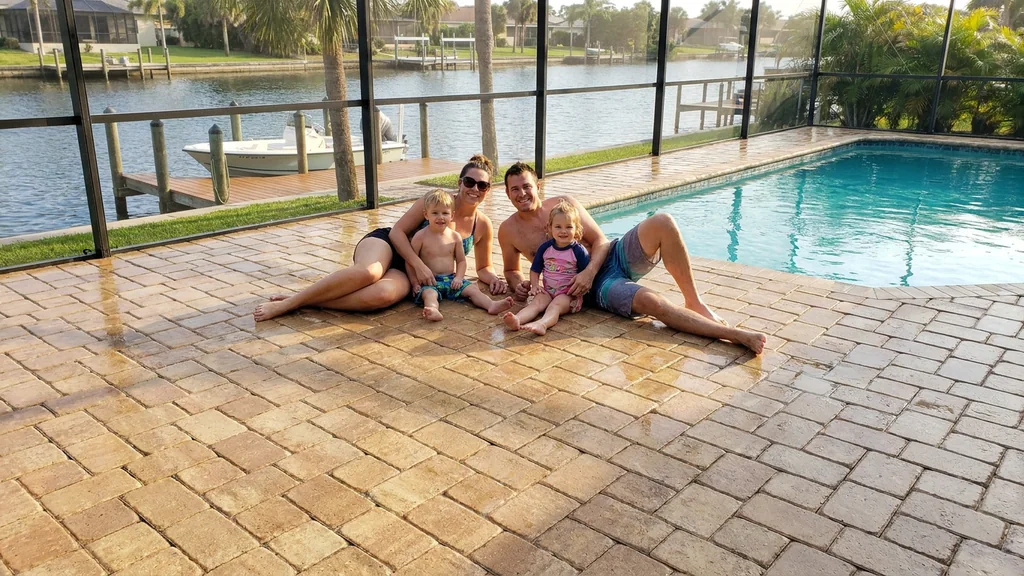
Why hire a local paver sealing contractor in Port St. John?
Port St John homes went up over many decades, so a contractor working here meets pavers of every age and every sort of old coat. Tell them roughly when your house was built when you request a free estimate, and they can plan around it.
A free look at your pavers
Your Port St John driveway or lanai gets inspected at no charge. You are quoted a price before any work begins.
A range to check against
Posted Brevard County rates for a clean, sand and seal run $1.85 to $4.00 per square foot. Hold a Port St John bid beside that range.
Your finish, your call
Wet look deepens color yet shows scuffs sooner where cars come and go. Matte stays close to the natural look.
No obligation
Date, finish and the final decision are yours. Asking about Port St John pricing commits you to nothing.
Get Your Free Estimate in Port St. John
Tell us about your pavers in Port St. John.
Free, no obligation
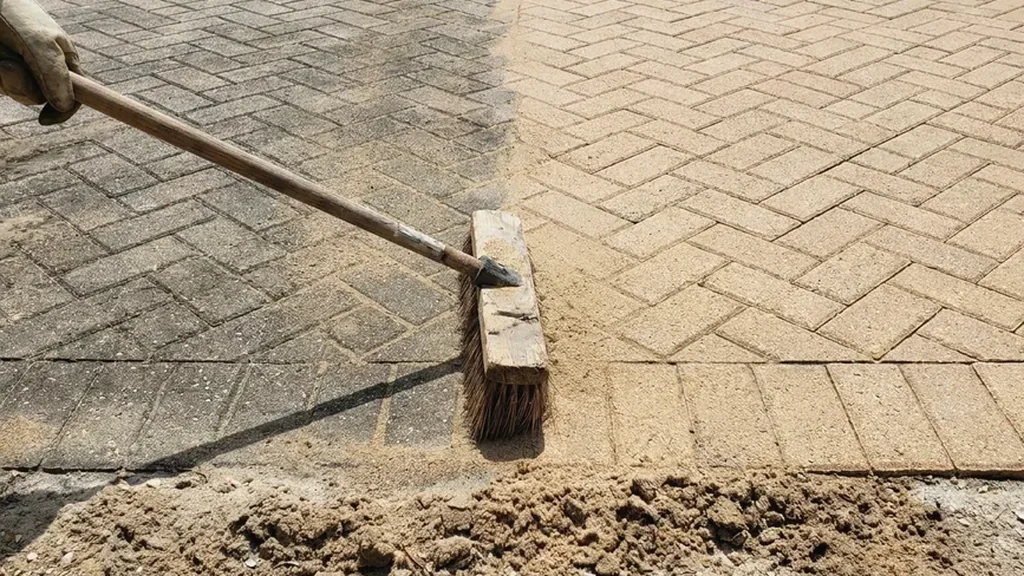
What paver problems show up most in Port St. John?
Pollen and leaf stain in place of salt
A paver company working Port St John says its inland location brings more pollen and oak stains than salt, along with the same humidity-driven algae. That means the dull film on a driveway here is more likely organic than salty. A coat over that film would trap it, which puts the wash first. Ask the contractor to show you the difference once a strip is clean, so you can see what the film was hiding. Rinse water is aimed away from the house and plants, and the wash is done before any sealer is opened.
Pavers of every age on one block
Port St John began as a General Development Corporation lot-sale community, and homes kept going up on those lots for decades. The census shows housing units rising from 4,544 in 2000 to 9,541 in 2020. That means one block can hold a driveway laid in the 1990s and one laid last year. Each needs a different amount of cleaning, sand and prep, and the quote should say so. A Florida travel history says homes kept going up on lot-sale subdivisions long after the roads were paved, which is why the newest and oldest driveways can sit side by side.
Sandy ground and thin joints
University of Florida extension says most Florida soil is sand, a gray fine soil called Myakka that covers most of the state. Heavy rain can carry joint sand away, and soil follows into the gap, according to Landscape Ontario, which gives weeds a foothold. Low joints in Port St John are the warning sign. Refilling the sand before sealing is what lets the coat hold. Ask the contractor to show you a joint that has been refilled, so you know what a full joint looks like.
A rainy season that picks the date
National Weather Service Melbourne puts the median start of the wet season at May 28 and the start of the dry season at October 17. That means a summer sealing date in Port St John can move when afternoon storms line up. A Brevard company says September through May brings lower humidity and less rain. If your date is flexible, those months are easier to hold. NWS adds that the first cool fronts of fall can be short-lived, so a clear week in October is not a sure thing.
Rust from well water
University of Florida extension says iron runs high in most Florida well water, and watering with it often leaves orange marks on pavers. A Port St John yard watered from a well may show rust-colored fans on the pavers wherever the spray lands. Those stains get treated ahead of sealing because a coat would hold them in. Pointing the heads away from the pavers stops new marks before they start. Ask whether the sprinklers run on well water, county water or reclaimed water, since that answer points to the likely cause.
Does a street near US 1 get a different job than one near Fay Lake?
Not a different job, but a different starting point, since Port St John is a patchwork of older communities. A 2002 plan to incorporate the area named Delespine, Williams Point, Hardeeville, Frontenac and part of Sharpes. A Brevard company lists Delespine, Frontenac, Sharpes and Fay Lake as places it serves in ZIP 32927. Name your community when you request a free estimate, and the contractor can plan around it.
Along US 1 on the Indian River side, Nicol Park is a 5.03-acre river park with picnic shelters, shoreline fishing and shuttle viewing. The Port St John boat ramp sits near the Fay Boulevard and US 1 intersection and holds 40 cars and boat trailers. Homes near the water edge can see damp, shaded corners. If damp, shaded corners describe your yard, call (321) 329-1122 and name the pavers in question.
Inland, Fay Lake Wilderness covers 192.7 acres with a 27-acre fishing lake at the west end of Fay Boulevard. Fay Park on Depot Road and the community center on Corto Road sit in between. Trees and open lots give each street a different mix of shade and sun. To talk about the shade on your driveway, request a free estimate.
What does paver sealing cost in Port St. John?
Brevard County companies publish $1.85 to $4.00 per square foot for a clean, sand and seal, and Port St John jobs fall in that band. Driveway, lanai and walk are totaled as one area, which sets the base figure. Leaf stain, thin sand and a coat to strip shift the final number. For a figure on your pavers, request a free estimate.
Age swings the price most. A newer set may need only a light wash and fresh sand, but a driveway from the 1990s often needs more of everything. A Brevard company says the typical home in ZIP 32927 was built in 1990, so many pavers here have some years on them. Call (321) 329-1122 and ask which group yours falls into.
| Paved area | Typical example | Clean, sand and seal |
|---|---|---|
| 300 sq ft | Small patio or walkway | $555 to $1,200 |
| 600 sq ft | Two car driveway | $1,110 to $2,400 |
| 1,000 sq ft | Large driveway or pool deck | $1,850 to $4,000 |
| 1,500 sq ft | Driveway plus pool deck | $2,775 to $6,000 |
Math based on the $1.85 to $4.00 per square foot that Space Coast paver companies publish. Your contractor sets the actual price after seeing the surface. Repairs, leveling and stripping failed sealer are usually extra.
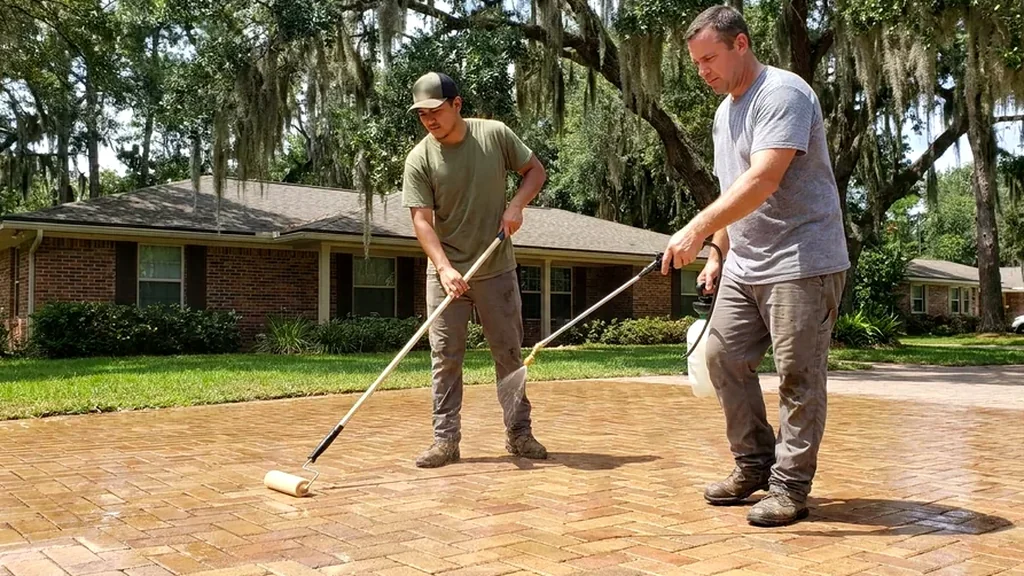
How does a paver sealing job work in Port St. John?
Look at the age and the coat history
The first questions are when the pavers went in and whether anyone has coated them since. Any existing coat matters, since a water-based sealer cannot be laid over a solvent-based one. Shade, drainage and the sprinkler line get noted too. Tell the contractor about any rust marks you have seen, and about any spot that holds water after rain. If you have closing papers or an old invoice, they may name the sealer.
Wash off the pollen, algae and old film
Cleaning comes next, aimed at organic film, algae and any weeds in the joints. A company working Port St John also treats efflorescence and strips failing sealer at this stage. Rust gets its own treatment. Washing hard also pulls sand from the joints, so refilling is already on the list. Plants beside the driveway are rinsed afterward. The contractor keeps the wash away from garage doors and plants.
Sand goes back into the joints
Since washing lifts out joint sand, new sand is worked in before any sealer. Open joints let soil in, and soil gives weeds a place to start. The contractor sweeps the sand in and settles it to the right level. On sandy ground, this step is what keeps the joints from emptying again. Edges along the garage and curb get the same care as the middle. The contractor checks each edge and each joint run, not only the middle of the drive.
Wait for a fully dry surface
Dry pavers come first, and a Brevard storm can close a dry window in minutes. One Brevard company says the surface must be clean and fully dry before any sealer goes on. Forecast and sprinkler timer both get watched. Shaded corners and joint sand are the slowest to dry. If a storm passes, the job simply waits for the next clear window. If the forecast shows a long wet spell, the contractor will propose a new date rather than push ahead.
Sealing in your chosen finish
The sealer goes down last, in whichever finish you picked. A wet look scuffs sooner than matte, so consider how hard the driveway gets used. Quoted gaps between coats run two to five years across companies. Sealer is rain ready within the hour, though cars should wait 72 hours.
Complete paver services in Port St. John
Work in Port St John goes wash first, then joint sand, then drying, then the coat. Pollen, leaf stain and algae come off at the start, and the sealer comes last, which keeps dirt from being locked beneath it. Ask what each stage involves on your lot by calling (321) 329-1122.
Tires and fallen leaves hit driveways hardest, while lanais and pool decks stay damp longer. Walkways under trees tend to turn green before other spots. Each surface may call for its own finish, so name the ones you have in mind when you request a free estimate.
Sealers are sold as water-based or solvent-based, each in matte or wet look. An earlier owner's solvent-based coat rules out a water-based product on top of it. Wet look adds depth on a lanai but shows scuffs sooner on a driveway. Call (321) 329-1122 to compare finishes for your Port St John home.
Weather drives the calendar. NWS Melbourne medians put the wet season's start near late May and the dry season's near mid October, and a Brevard company calls September through May lower in humidity and rain. To book a window that suits your street, request a free estimate.
Questions to ask before you hire
- Is the sealer a film-forming acrylic or a penetrating type, and why that one for my pavers?
- Can you seal around a screened lanai and pool cage without overspray?
- What do you do when afternoon rain is in the forecast on the day of the job?
- How soon can we walk on the pavers, and when can the car go back on the driveway?
- Do you add joint sand after the wash, and what kind is it?
- Will the finish be glossy, satin or natural looking, and can I see a sample first?
- Does the sealer hold up near salt air and daily sprinkler water?
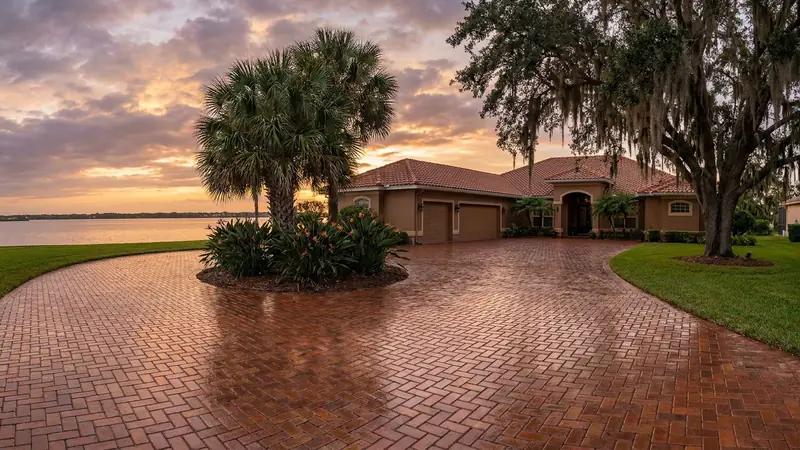
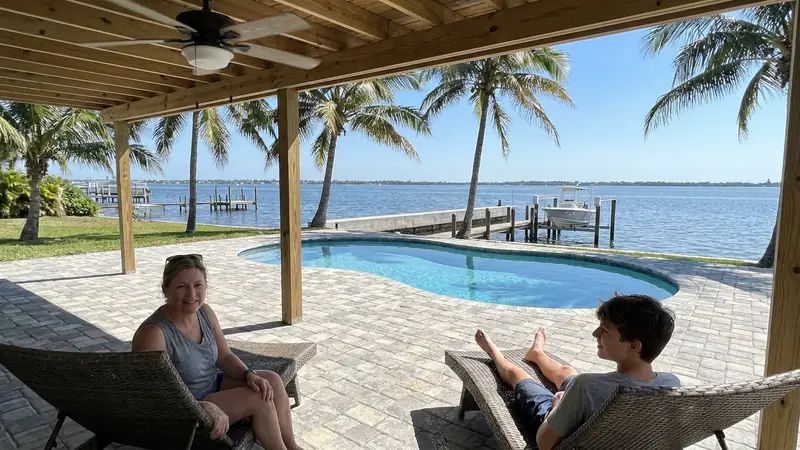
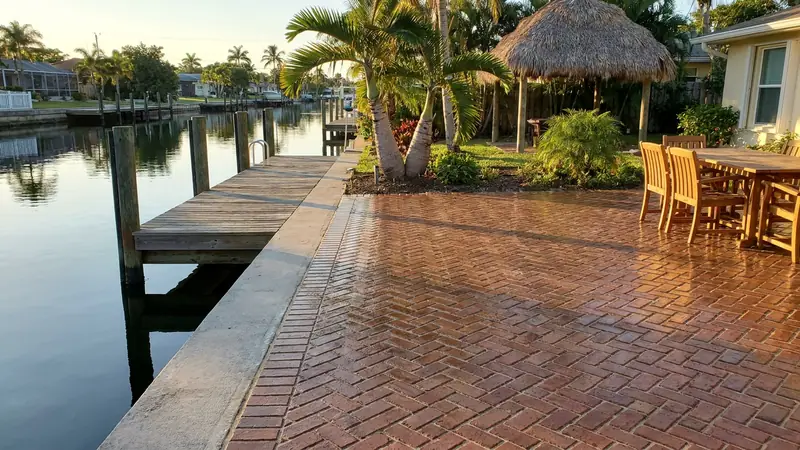
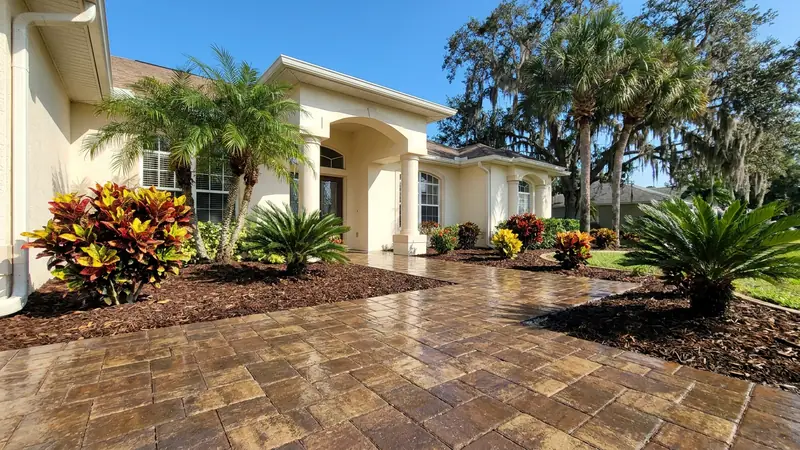
What do sealed pavers look like around Port St. John?
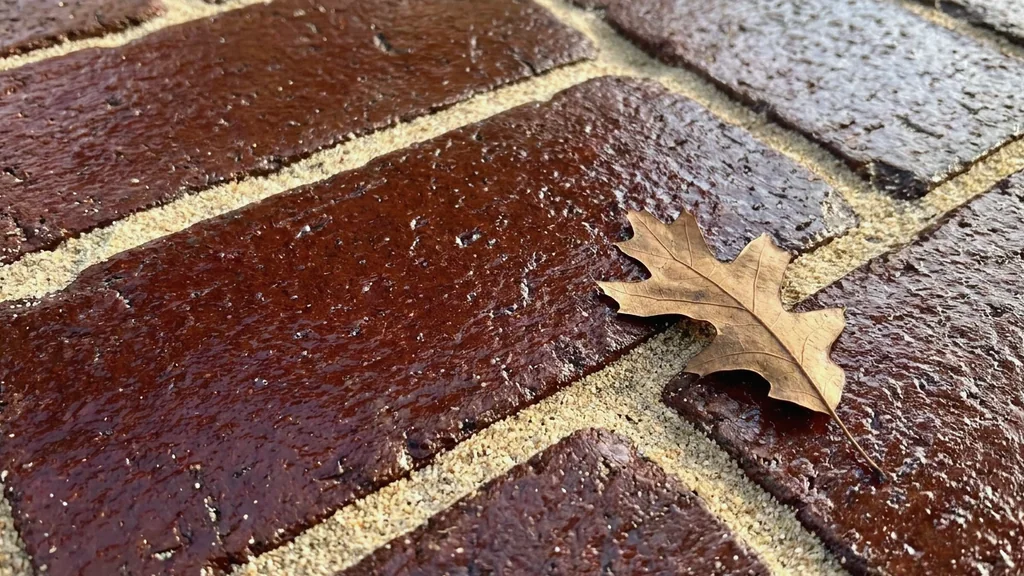
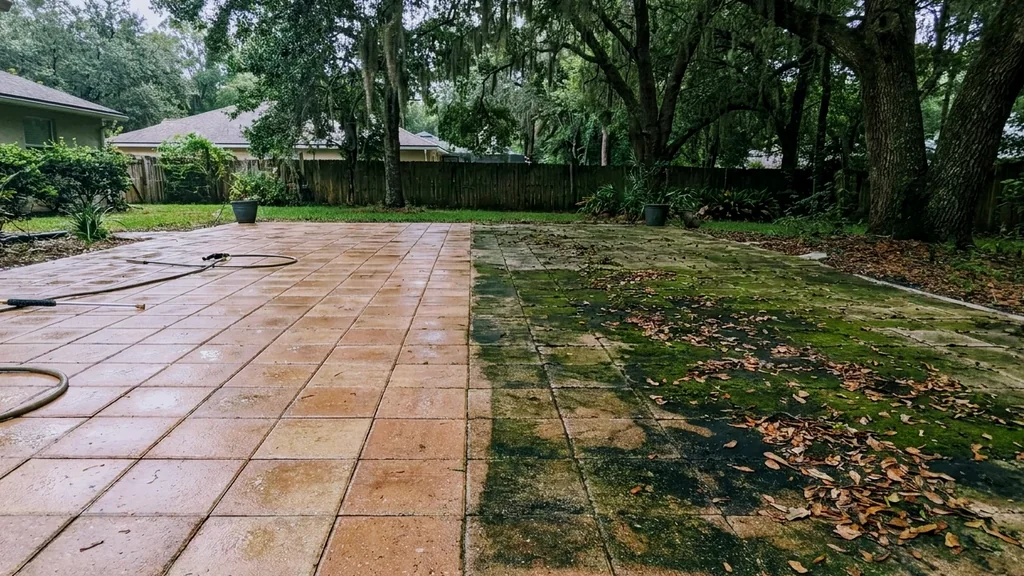
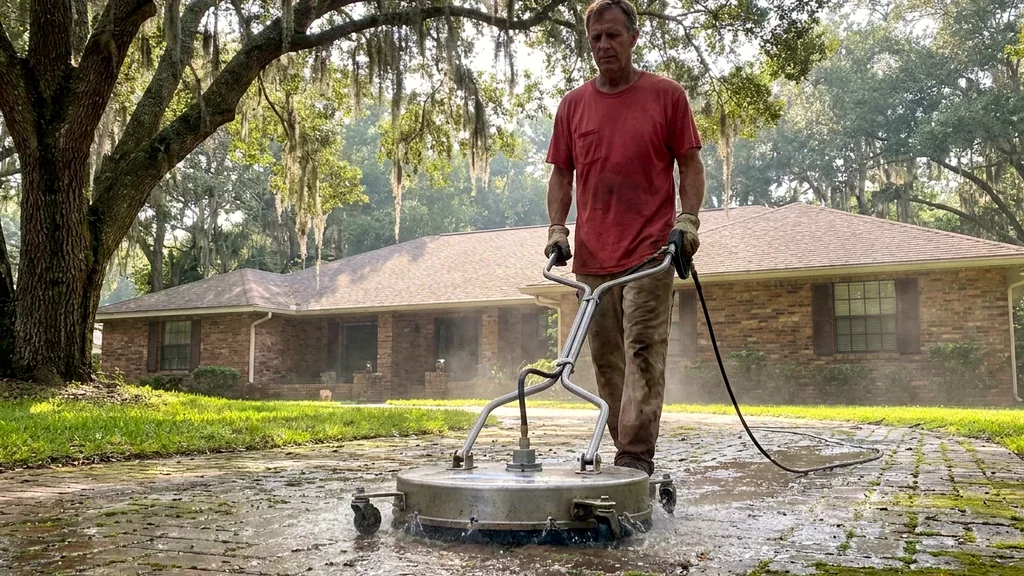
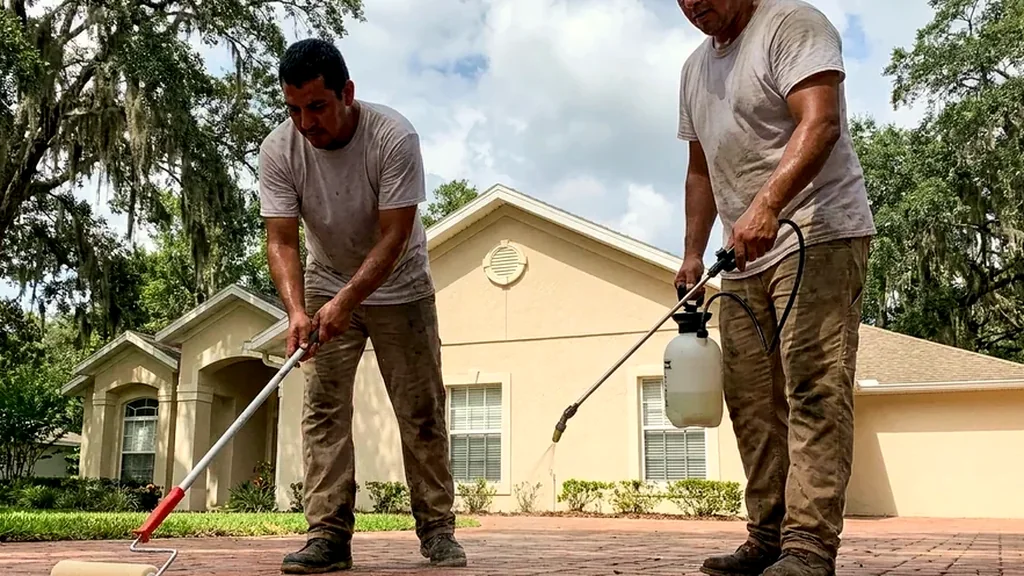
Why local matters in Port St. John
A contractor who knows Port St John knows the homes were not built all at once. One street can mix older lots with new builds, so the cleaning and sand each driveway needs will differ. Someone who quotes by street name alone may miss that. Call (321) 329-1122 if you want a contractor who already works these streets.
Local work also means knowing what the trees leave behind. A company working Port St John says inland pavers pick up more pollen and oak stains than salt. That changes the wash, since the film is organic. You can request a free estimate and ask what the plan is for tree shade on your lot.
Water matters here too. If your yard waters from a well, iron can leave orange stains, and a local contractor looks for them before sealing. Treating them first keeps the coat from locking them in. If you have noticed rust marks, mention them when you request a free estimate.
Why do so many Port St John pavers have different histories?
Because the area began as a lot-sale community in the 1950s and 1960s, and homes were added slowly over decades. General Development Corporation named several Florida towns with Port first, and Port St John was one of them. The roads were paved before many homes existed, and some local parents taught their kids to drive on them. If your house sits on one of those old lots, request a free estimate and ask about older pavers.
The population grew from 8,933 in 1990 to 23,474 in 2020, and housing units rose from 4,544 to 9,541 between 2000 and 2020. Schools include Atlantis, Challenger 7 and Enterprise elementary schools and Space Coast Jr/Sr High. Fay Lake Wilderness, Nicol Park and the Corto Road community center are some of the landmarks people name. If you are close to one of them, call (321) 329-1122 and give the street you live on.
Frequently Asked Questions
How often should you reseal pavers near Port St John?
Companies quote anywhere from two to five years between coats, and one Brevard company calls two to three typical. Heavy tree cover and daily tires are reasons to lean shorter. The contractor can check your color and joints and tell you where yours stands. Tree shade can slow fading but invites green film, so both are worth a look.
How much does it cost to seal pavers in Port St John?
A clean, sand and seal is published at $1.85 to $4.00 per square foot by Brevard County companies. A Port St John job moves within that range with size, leaf stain, joint sand and any old coat. Make sure the quote states the total area so the math can be checked. A Brevard company says its estimate lists cleaning, re-sanding and sealing as separate lines, so ask for the same breakdown.
Is it a good idea to pressure wash pavers in Port St John?
Washing is the first step of sealing, since sealer over pollen film or algae locks it in. A hard wash pulls joint sand out, so the joints are refilled afterward. Per a Brevard company, pressure of 1,500 PSI or less is the safer choice once sealer is on.
Is it better to spray or roll paver sealer in Port St John?
Both methods can work if coverage stays even. One Brevard company describes pro application as a low-pressure spray with edges and neighboring surfaces taped off. Ask which method will be used and how plants and the house wall are covered.
Do Port St John pavers get salt air damage?
Some, but less than beach towns. A Brevard company says salt air still moves inland and UV fades pavers far from the coast. A company working Port St John says pollen and oak stains are the bigger story here. That is why the wash here focuses on pollen film more than salt.
Can a fresh coat go on top of old sealer at a Port St John home?
Often not, as a water-based product will not stick over a solvent-based one. The old product has to be named before a new one is picked. Many homes here date back decades, so a past owner may have used a product nobody wrote down.
Why do my Port St John pavers show orange stains?
Iron in well water is a common cause. Extension specialists at the University of Florida link orange irrigation stains to iron in well water. Those stains are treated before sealing, since a coat would trap them. Pointing the heads away from the pavers, or fixing a leaky head, keeps new stains from forming.
Which time of year suits sealing pavers in Port St John?
A Brevard company says September through May brings lower humidity and less rain. NWS Melbourne puts the median start of the dry season at October 17. Sealing is done year-round, but the dry months make for fewer delays. Early fall fronts can be short-lived, so keep a backup date in mind.
What do professionals use to seal pavers in Port St John?
The two sealer families are water-based and solvent-based, sold in matte and wet look, and a coat already down can limit the pick. A water-based sealer is the wrong product over a solvent-based one. Keep the product name on file for the next time.
How long should a sealed Port St John driveway rest before cars return?
One Brevard company gives rain ready as 45 minutes to 1 hour and fully cured as 48 hours, with 72 hours before a car returns. The right wait depends on the product used, so get that number from the contractor. Switch that sprinkler zone off until the cure is done.
Will sealing stop weeds in my Port St John paver joints?
Weeds are discouraged, not banished, by a sealed joint. According to Landscape Ontario, a cleaned and sealed joint is less welcoming to ants and weeds. Lost sand is how soil and weeds get in, so the joints are topped up first. A weed that returns in the same joint usually means sand is missing under it.
Is it too late to seal older pavers in Port St John?
Usually not. Cleaning and sealing discourages weeds and ants in the joints and enhances color, as Landscape Ontario notes. Sunken or loose pavers need repair first, since sealing does not fix a failed base.
Nearby areas we serve
Ready for a Free Estimate in Port St. John?
Call (321) 329-1122 and tell us about your pavers.
Free, no obligation