
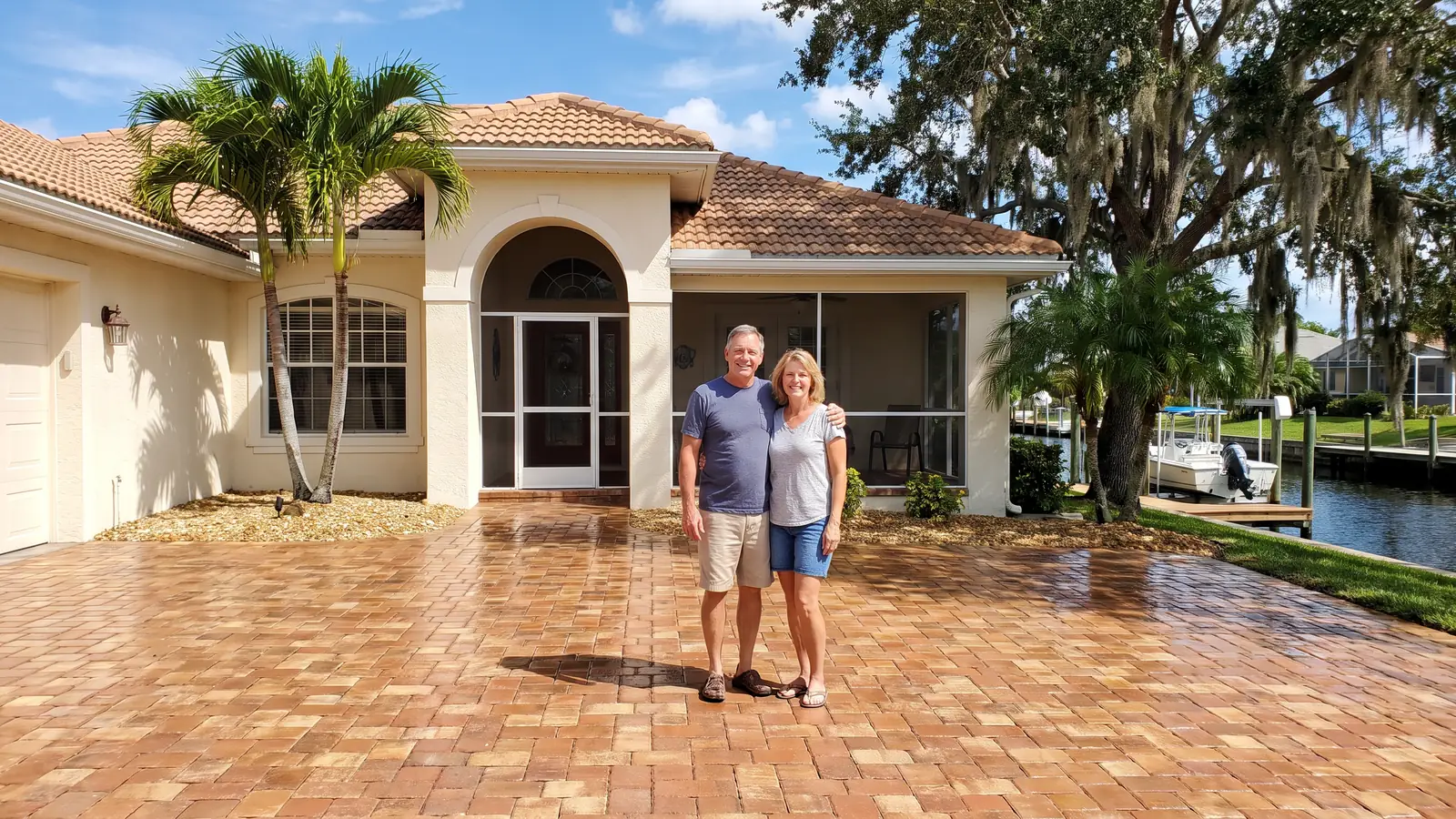
Paver sealing for Melbourne homes
Paver Sealing in Melbourne, FL
Melbourne pavers laid in any decade, from Historic Downtown to the lagoon shore, can be sealed again, so call (321) 329-1122.
- Brings out deeper paver color
- Fresh joint sand helps lock pavers in place
- Gives weeds less room to grow
- Makes the surface easier to keep clean
- Free estimate, no obligation
Request a Free Estimate
Free, no obligation.
Fast, careful paver sealing in Melbourne
Paver sealing in Melbourne begins with a free estimate from a local contractor, who washes, re-sands and seals driveways, patios, walkways and pool decks. Replies arrive inside a business day, and the call costs nothing. The first step is easy: request a free estimate.
Think of the front walk that has gone dark in patches, with weeds standing in joints that have thinned out. A wash, new sand and a fresh coat bring back an even color and firm joints. To point out the spot that bothers you most, call (321) 329-1122.
A big city has homes from many decades, so a short first call saves time. Mention roughly when the house was built, whether anyone ever sealed the pavers and which part of town you live in. Put those notes in the message when you request a free estimate.
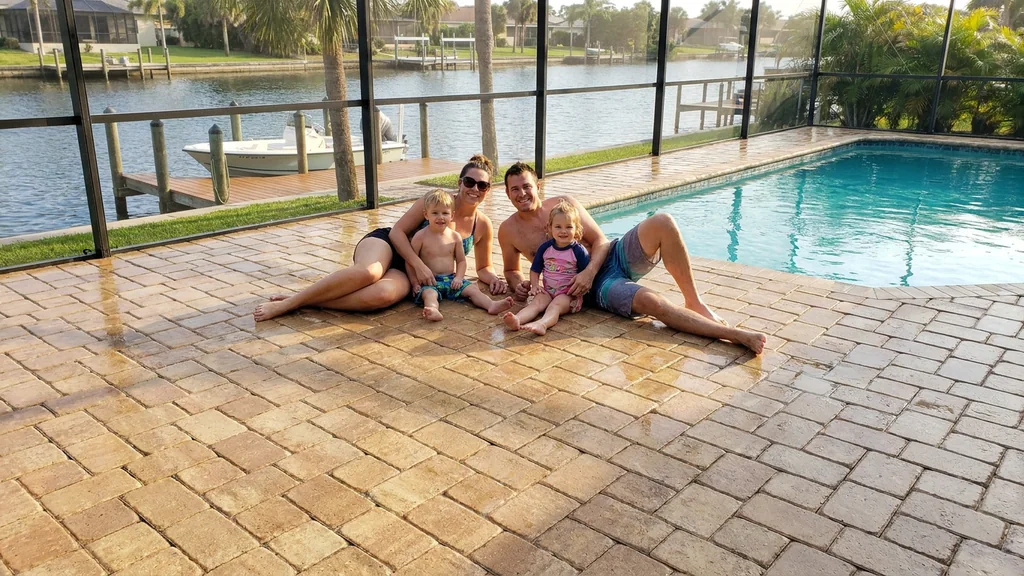
Why hire a local paver sealing contractor in Melbourne?
Melbourne grew from 4,223 people in 1950 to 84,678 in 2020, so its driveways carry pavers laid in many different years. To hear how that applies to your home, request a free estimate.
Seen before priced
A local contractor looks at your Melbourne pavers first, so any number you hear fits the actual surface.
A spread you can test
A quote that shows area and rate lets you hold it up against the county range below. Hold any Melbourne bid against that spread.
One line per surface
Driveway, patio and pool deck wear differently, so the quote can list each with its own size and plan.
Finish chosen by you
Matte keeps a natural look and a wet look deepens color. The estimate is free and nothing obliges you to hire.
Get Your Free Estimate in Melbourne
Tell us about your pavers in Melbourne.
Free, no obligation
What paver problems show up most in Melbourne?
A wet season that runs over four months
Melbourne's wet season starts in late May and runs through October. At a north Melbourne gauge, 64 percent of the yearly rain fell in about 138 days. All that water can pull sand from the joints and keep shaded pavers damp. Sealer needs a dry surface, so a job here is planned around the gaps between storms. Frost shows up only about two days a year, so the pavers rarely get a long break from damp. A shaded walkway that never fully dries between rains can hold green film all year, and the contractor will want to see that spot first.
Storm drains that lead to the lagoon
About 80 percent of Melbourne's land drains toward the Indian River Lagoon, and the city bans lawn fertilizer from June 1 through September 30. Wash water from a paver cleaning carries loose sand and grime toward the same drains. Ask any contractor how rinse water is handled. One Brevard company says it collects runoff in a reclamation system. The same question applies to oil, rust treatments and cleaners used on the pavers.
Pavers laid in different eras
Melbourne had 11,982 people in 1960 and 40,236 in 1970, then kept growing to 84,678 in 2020. Homes from each stretch carry pavers laid in different years, often with different sealers. The contractor must learn what is on yours first, because an old coat limits what can go on top. A cloudy or peeling patch is the first clue, and an old receipt or product name can settle the question at the first visit.
Salt and wind on the beachside
A small part of Melbourne, called Melbourne Beachside, sits on the barrier island. University of Florida extension says coastal Florida has inescapable salt and sandy soil, and plants within about one-eighth of a mile of saltwater feel it. Salt spray and wind are the reasons a beachside patio can look tired sooner than one inland. Ask the contractor how often that kind of surface should be checked after the job is done.
Sun and heat on open drives
July highs in Melbourne average 89.7 F, and a Brevard company ties paver fading to the harsh sun in the county. Another Melbourne company says sealing does not stop normal fading. A driveway with no shade takes the most sun, so a finish sample helps you decide how much color you want to hold on to. Brighter color will not last forever in the sun, and a wet look deepens it more than matte does.
Does the age of my Melbourne neighborhood change what my pavers need?
Yes, because Melbourne grew in waves. The 2020 Census counted 84,678 people, up from 11,982 in 1960 and 40,236 in 1970, and the 1969 merger with Eau Gallie doubled the city's size. Homes from each wave carry different pavers and different sealer histories. When you request a free estimate, note roughly what year your home was built.
Streets near Historic Downtown Melbourne sit in the older part of the city, where a fire in 1919 destroyed the original downtown along Front Street. The Eau Gallie Arts District runs along the lagoon, and the Babcock Street Redevelopment District covers the stretch from US 1 south to US 192. An older lot can hold several layers of past work, so call (321) 329-1122 and describe what you see.
A small part of the city, Melbourne Beachside, is on the barrier island and is often confused with the separate town of Melbourne Beach. If your address is on the island side, say so, since salt and wind change the plan. You can request a free estimate and note which side of the causeways you live on.
Several National Register sites sit in the city, including the Rossetter House on Highland Avenue, Green Gables in Historic Riverview Village and the Gleason House on Pineapple Avenue. If you live near one of these older streets, call (321) 329-1122 and mention it, since older lots can carry layers of past work.
What does paver sealing cost in Melbourne?
Brevard companies post prices of $1.85 to $4.00 per square foot for cleaning, sanding and sealing, and Melbourne sits inside that spread. Where a job lands depends on paver condition, sealer type, access and any older coat. To price your own driveway, request a free estimate.
Several surfaces on one property are priced together but listed apart. One Melbourne company looks at a driveway, patio and pool deck in a single visit and evaluates each area separately. Ask for the same, and call (321) 329-1122 if a line looks unclear.
Prep time moves the number more than sealer does. Heavy green film, oil spots, rust or thin joint sand all add washing and sanding hours. Photos help, so send a few when you request a free estimate; pavers in good shape tend to land lower.
| Paved area | Typical example | Clean, sand and seal |
|---|---|---|
| 300 sq ft | Small patio or walkway | $555 to $1,200 |
| 600 sq ft | Two car driveway | $1,110 to $2,400 |
| 1,000 sq ft | Large driveway or pool deck | $1,850 to $4,000 |
| 1,500 sq ft | Driveway plus pool deck | $2,775 to $6,000 |
Math based on the $1.85 to $4.00 per square foot that Space Coast paver companies publish. Your contractor sets the actual price after seeing the surface. Repairs, leveling and stripping failed sealer are usually extra.
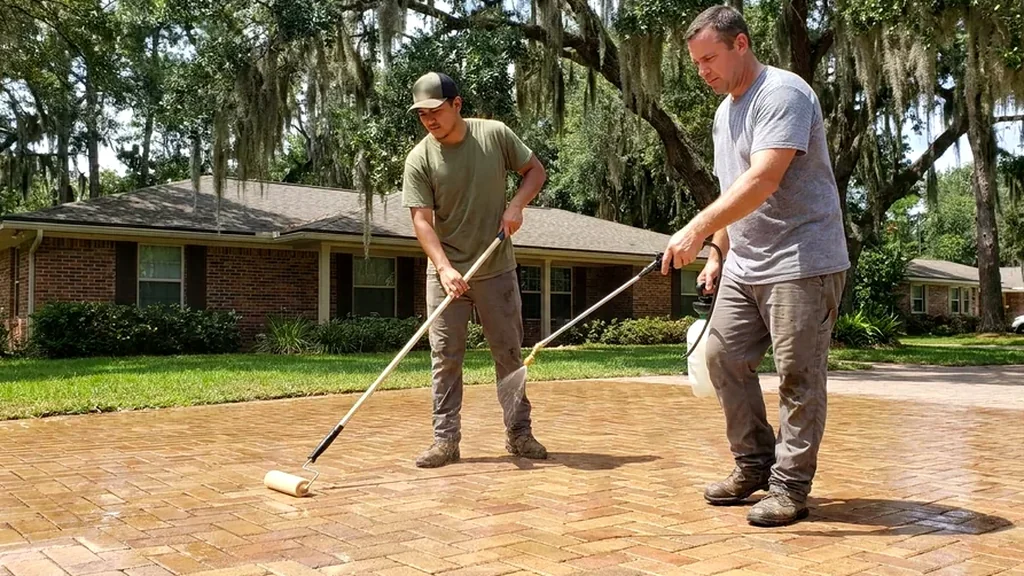
How does a paver sealing job work in Melbourne?
Walk, mark and test
The contractor walks your Melbourne pavers, marks sunken or loose spots and asks about earlier sealing. Low spots are reset first. A coat already down gets identified before anything else is chosen.
Wash and treat stains
Cleaning lifts green film, oil and dirt, and rust or white deposits are treated on their own. A narrow, hard spray can push sand from the joints, and one Brevard company washes at 1500 PSI or less. Ask where rinse water goes, because most of Melbourne drains toward the lagoon.
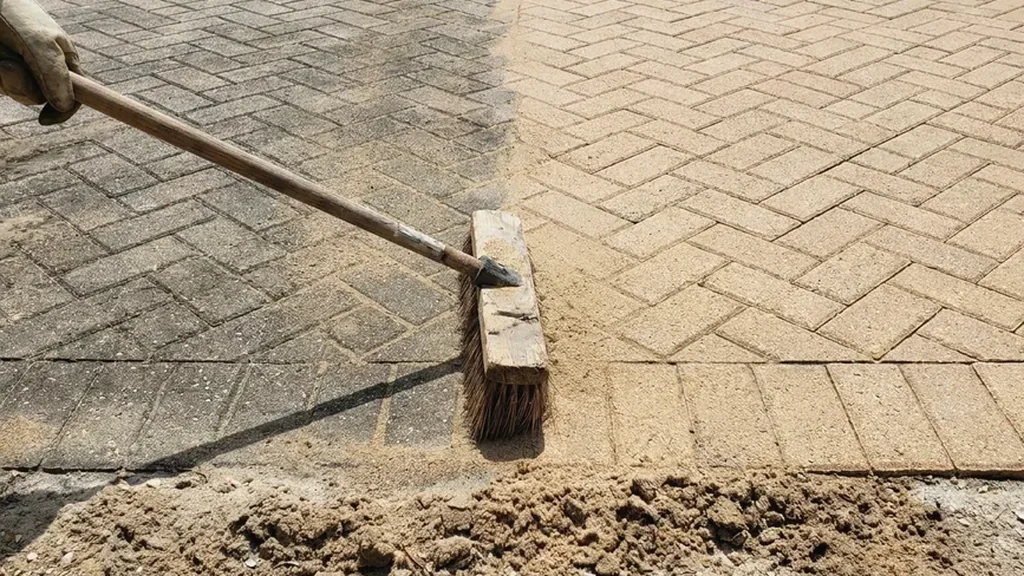
Put the sand back
Joint sand goes back in after the wash. In one Brevard company's process the joints are wet-sanded and swept dry. Full joints help pavers stay locked through a wet season of about 138 days and leave weeds less room.
Choose a dry window
The contractor watches the forecast. One Brevard company says year-round work is possible with planning, though September through May has lower humidity and less rain. Shaded patios stay damp longer, so they are checked first.
Seal and set return times
Sealer goes on in your finish, often in two or three coats. Quotes for time between coats run from two years up to five. Cure time depends on the product, so ask the contractor for it in hours.
Complete paver services in Melbourne
Melbourne work follows a sequence that starts with a visit. The contractor reads the surface, cleans it, puts the sand back, lets it dry and then applies sealer. Reading comes first since sunken spots and old coats can change the plan. For a sense of timing at each stage, call (321) 329-1122.
Surfaces wear differently around the city. Driveways take tires and sun, patios take furniture and shade, and pool decks take chemicals and wet feet. One Melbourne company stresses that sealing is not slip-proof, so ask about traction when you request a free estimate.
Finish is the choice most owners notice. Matte keeps a natural look, while a wet look deepens color but scuffs sooner. Travertine often gets a traction additive. Call (321) 329-1122 to talk through which finish suits your driveway, patio and pool deck.
Weather sets the calendar. Melbourne's wet season starts in late May and ends in October, and the dry season runs November through April, when sealing days are easiest to hold. A storm can still move a date, so request a free estimate and ask how flexible the schedule is.
Questions to ask before you hire
- Is the sealer a film-forming acrylic or a penetrating type, and why that one for my pavers?
- How soon can we walk on the pavers, and when can the car go back on the driveway?
- Will the finish be glossy, satin or natural looking, and can I see a sample first?
- Can you seal around a screened lanai and pool cage without overspray?
- Does the sealer hold up near salt air and daily sprinkler water?
- Does the estimate cover a second visit if the sealer needs a touch-up?
- Will you mark and fix sunken or loose pavers first, and is that priced separately?
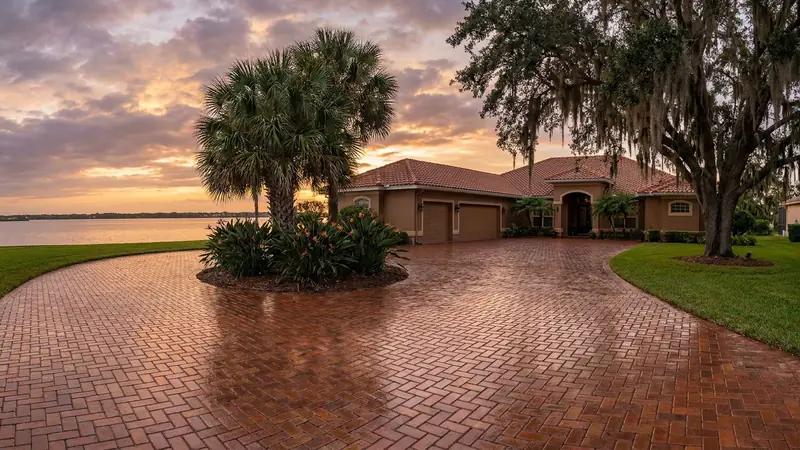
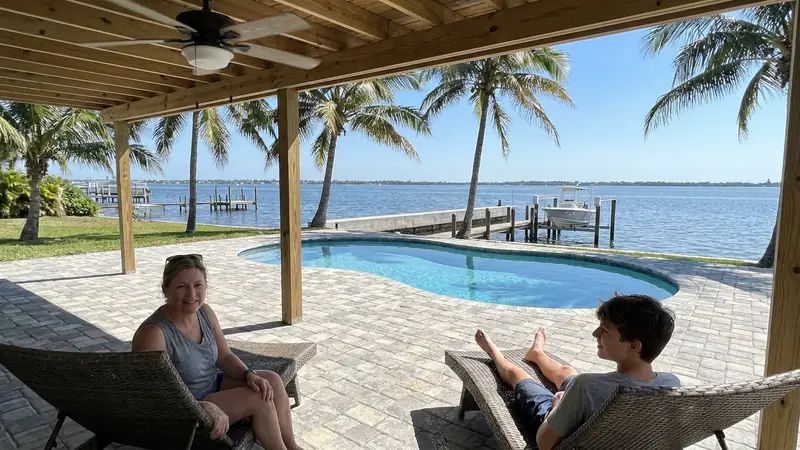
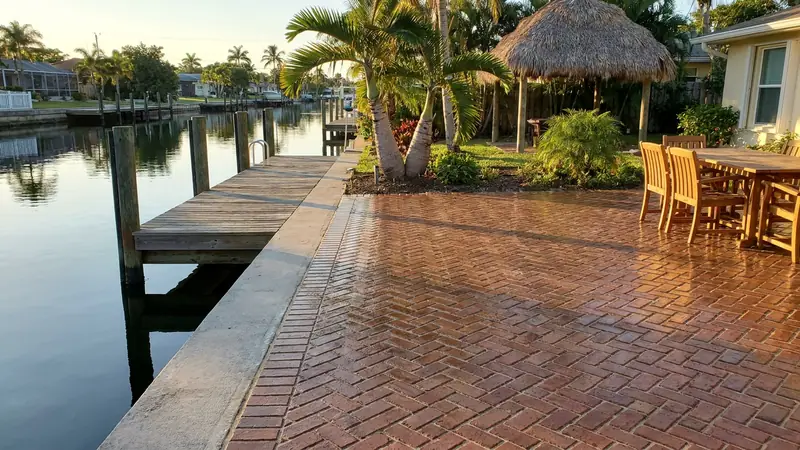
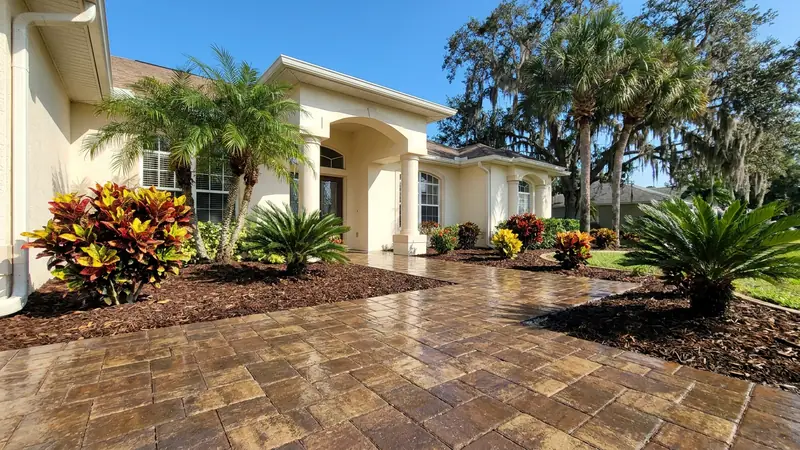
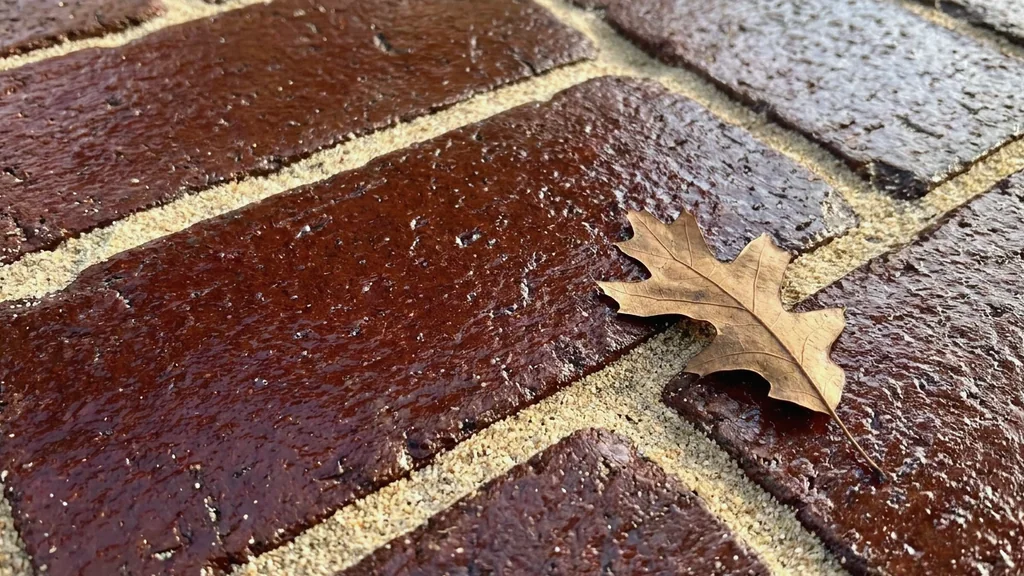
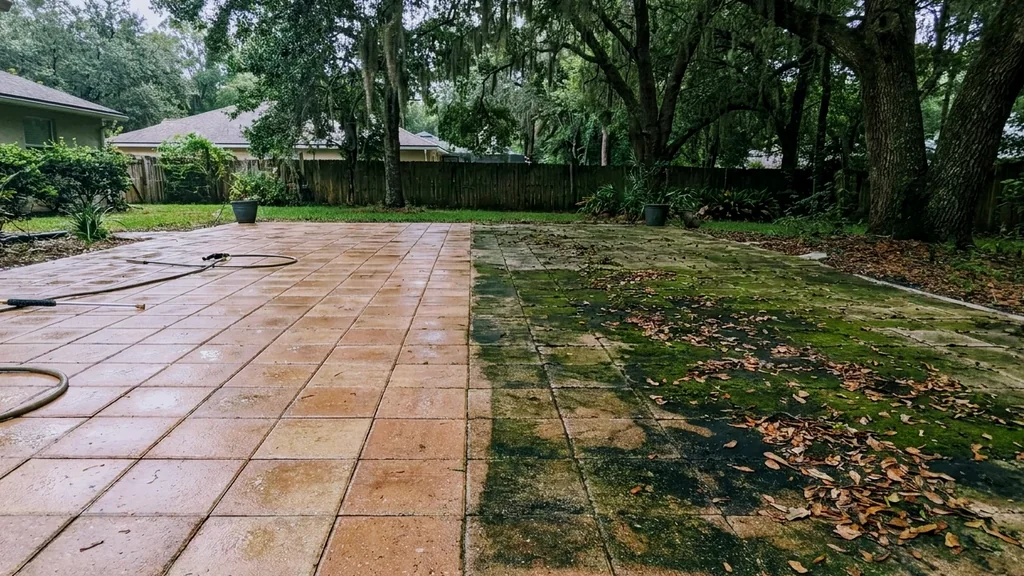
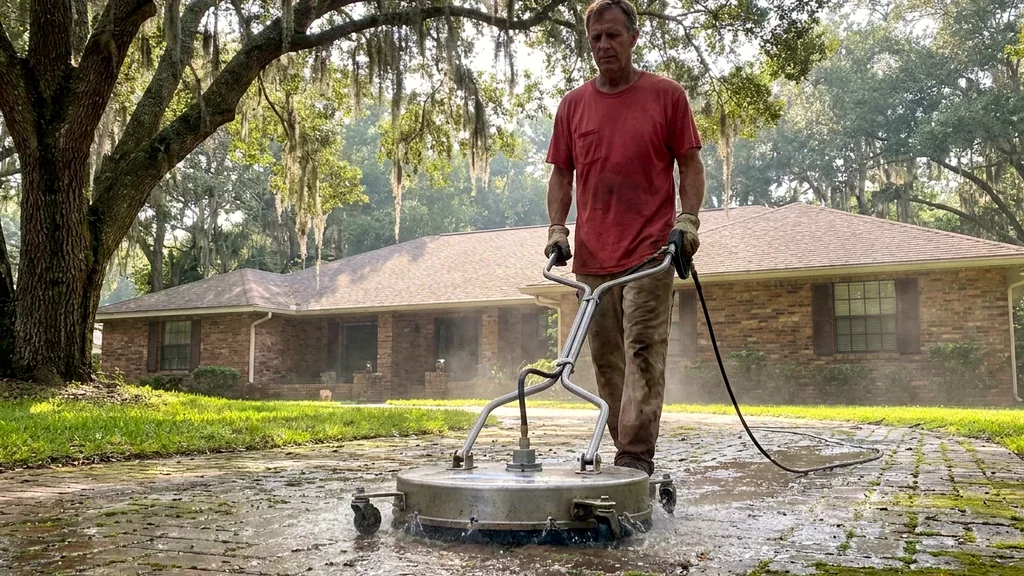
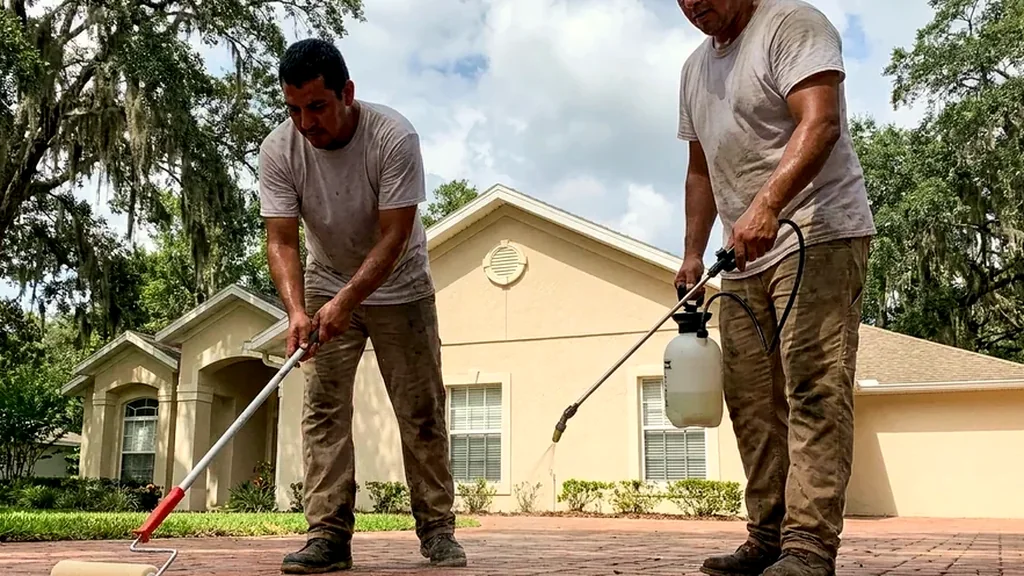
What do sealed pavers look like around Melbourne?
Why local matters in Melbourne
A contractor who works in Melbourne knows the wet season lasts about 138 days at the north Melbourne gauge. That shapes when sealing can happen. Call (321) 329-1122 to reach a contractor who covers Melbourne.
Local work also means knowing where water goes. Most of the city drains toward the Indian River Lagoon, and the city bans lawn fertilizer from June 1 to September 30 and fines clippings in storm drains. Blowing grass clippings into a street or storm drain is illegal in the city all year, so clippings swept off a driveway belong back on the lawn. Ask how wash water is handled, and request a free estimate to start that talk.
Melbourne's mix of old and new streets matters too. A lot from the 1950s and a newer subdivision raise different questions about past sealer, sand levels and access. Call (321) 329-1122 and ask how a crew would approach your street.
What should I know about Melbourne's history before sealing my pavers?
Mainly that the city is older than most of its pavers. Melbourne was settled around 1867 and became a village on December 22, 1888. Naval Air Station Melbourne opened in late 1942 and operated until 1946, and the city has kept growing since. If your home sits near the old downtown, request a free estimate.
Eau Gallie, a separate city before the July 15, 1969 merger, brought lagoon-front streets and an arts district into Melbourne. The Melbourne Causeway and the Eau Gallie Causeway link the mainland to the beaches, and US 1 runs six lanes through the city as Harbor City Boulevard. If you are near any of these places, call (321) 329-1122 and give your street.
The city keeps over 554 acres of parks, including Wickham Park and Erna Nixon Park. Palms that thrive here, including coconut, royal and Christmas palms, show how mild the winters are, with frost on about two days a year. If your pavers sit under palms or near a park, request a free estimate.
Melbourne's water comes from two plants that draw on Lake Washington and deep wells, and the service area reaches into West Melbourne. A home with its own irrigation well may have iron in the water, which leaves orange streaks. Tell the contractor what feeds your sprinklers when you request a free estimate.
Frequently Asked Questions
What is the average cost to seal pavers in Melbourne?
$1.85 to $4.00 per square foot is the range Brevard companies post, and Melbourne sits inside it. Where Melbourne lands in that span depends on condition, access, sealer and what is on the pavers now. A written quote that lists each surface makes bids easy to compare.
How often should you reseal pavers in Melbourne?
Two to three years between coats is what one Brevard company advises, and other quotes go as far as five. Strong sun, wet-season shade and daily tires push toward the short end. Fading, stains and weeds showing in the joints mean it is time. A quick look at your driveway each spring is an easy habit.
Is there a downside to sealing pavers in Melbourne?
Sealer slowly wears and needs a fresh coat, and a wet look scuffs sooner than matte. It also needs a dry surface, so a wet-season storm can move your date by a day or more. A wrong product or poor application can also leave a cloudy white film that has to be redone.
Is sealing worth it for a Melbourne patio?
It is a choice, but sealing helps guard against stains and weeds and makes routine cleaning easier. A Brevard company says it also reduces loss of joint sand. Patios under heavy shade need a thorough cleaning first, so green film does not end up under the sealer. Sealing also makes routine cleaning easier afterward.
Can pavers be sealed during Melbourne's wet season?
Yes, with planning, though it takes patience. One Brevard company says year-round work is possible, and that September through May has lower humidity and less rain. The wet season here runs late May through October, and sealer needs a dry surface, so the contractor picks a dry window. Expect the date to stay flexible until the forecast looks clear for a couple of days.
Does Melbourne's summer fertilizer ban change how pavers are cleaned?
Not directly, since the ban covers lawn fertilizer from June 1 through September 30. It does show how much the city cares about runoff, because most of Melbourne drains toward the Indian River Lagoon. Ask any contractor how wash water is collected or kept out of storm drains. The city also bans blowing grass clippings into streets and storm drains all year.
Will sealing make my Melbourne pool deck slippery?
Sealing does not make pavers slip-proof, and wet outdoor surfaces still need care. One Melbourne company says to discuss traction around pools, and a Brevard company recommends a traction-additive coating for travertine. Pool decks also need a sealer rated for chemicals, so ask which product is planned and how it handles wet feet.
What if I do not know what sealer is on my Melbourne pavers?
The contractor can check the surface, because water-based sealer cannot go over solvent-based sealer. Peeling, cloudy or tacky spots are clues. If you find an old receipt or product name, share it at the first visit, since it can settle the question quickly. Without it, the contractor checks the surface itself.
Which parts of Melbourne can get paver sealing?
All of them, from Historic Downtown and the Eau Gallie Arts District to the streets near the causeways and the small beachside part of the city. Homes here were built in many different decades, so say roughly when yours went up. Give the contractor your street and what the pavers are made of.
Does well water or city water change how Melbourne pavers are cleaned?
It can. The city's water comes from Lake Washington and deep wells, but a home with its own irrigation well may use high-iron water, which leaves orange streaks. Rust needs its own treatment before sealing, so tell the contractor what feeds your sprinklers.
Do older homes near Historic Downtown Melbourne need extra care?
Yes, in the sense that older lots can hold layers of past work and tight spaces. A fire in 1919 destroyed the original downtown along Front Street, and the district was rebuilt. Tell the contractor if your pavers sit close to old walls or trees, so rinse water is handled with care.
Why do Melbourne pavers turn green so quickly?
Moss, lichens and algae tend to grow where shade is heavy and pavers stay damp, and Melbourne's wet season lasts about 138 days. Palms and oaks add shade in some yards. A wash clears the film, and sealing makes routine cleaning easier afterward.
Ready for a Free Estimate in Melbourne?
Call (321) 329-1122 and tell us about your pavers.
Free, no obligation